

TV reboots are a dominant force in the American entertainment landscape, strategically resurrecting classic shows by leveraging built-in brand recognition to mitigate financial risk. This trend goes beyond mere nostalgia, employing key revival strategies like narrative continuation—where original cast members return decades later, as seen in Cobra Kai and Gilmore Girls—and modernized reimaginings that update classic premises for contemporary social contexts, such as Charmed and One Day at a Time. While driven by audience demand for comfort viewing and studio economics, the success of a reboot hinges on a delicate balance: honoring the original’s essence while introducing fresh perspectives and diverse representation that resonate with today’s viewers, ensuring the show feels both familiar and new.
How Are TV Reboots Bringing Classic Shows Back to the U.S.? The Nostalgia Gold Rush, Explained
There’s a peculiar comfort in the familiar. In an era of unprecedented choice and constant digital flux, millions of Americans are finding solace in the television shows of their past. The opening chords of the Friends theme song, the distinct ring of a 1990s cell phone on Beverly Hills, 90210, or the sleek silhouette of the USS Enterprise—these are more than just memories; they are cultural touchstones. The entertainment industry has taken note, launching a full-scale excavation of our collective pop-culture consciousness. The result? We are living in the golden age of the TV reboot.
But what exactly is driving this relentless revival of classic shows? Is it a lack of original ideas, or a savvy business strategy tapping into a powerful human emotion? The answer is complex. The modern TV reboot is not a simple rerun. It’s a sophisticated, multi-million dollar endeavor that recalibrates beloved stories for a new generation. It’s a high-wire act where studios must balance passionate nostalgia with contemporary sensibilities. This article delves deep into the phenomenon, exploring the economic engines, the creative strategies, the psychological appeal, and the secret formula that separates triumphant returns from forgettable misfires. We’ll answer the questions you’re asking and provide a definitive guide to understanding how your favorite classics are being brought back to life.
The Reboot Economy: Why Studios Are Betting Big on the Past
In the high-stakes world of television, where a single season of a streaming show can cost hundreds of millions of dollars, minimizing risk is paramount. This is the foundational logic behind the reboot boom.
- Built-In Audience and Brand Recognition: Launching a completely new IP (Intellectual Property) is a monumental marketing challenge. A reboot, however, comes with a ready-made audience. The title alone—Sex and the City, Full House, Bel-Air—immediately sparks recognition and curiosity. This pre-sold awareness drastically reduces marketing costs and virtually guarantees a strong initial viewership, a metric crucial for survival in the streaming wars. According to a study by Parrot Analytics, demand for rebooted series often spikes by over 100% in the weeks leading up to their premiere, demonstrating the powerful pull of established brands.
- The Power of Nostalgia as a Marketable Commodity: Nostalgia is more than a feeling; it’s a potent psychological driver of consumer behavior. In psychologically uncertain times, people gravitate toward media that provides comfort and certainty. Reboots offer a safe, known quantity. They are emotional comfort food, allowing viewers to reconnect with their younger selves and a seemingly simpler time. Streaming algorithms are finely tuned to promote this “comfort viewing,” further fueling the cycle.
- The Streaming Wars and Content Arms Race: With countless platforms vying for subscriber attention, the demand for a relentless firehose of content is insatiable. Reboots represent a faster, more reliable pipeline for new material than developing untested concepts from scratch. A reboot can be greenlit, produced, and marketed with a speed that original concepts often can’t match, helping platforms like Paramount+, HBO Max (now Max), and Peacock fill their libraries with recognizable, “must-watch” programming.
Beyond the Rerun: The Four Creative Models of the Modern Reboot
Not all revivals are created equal. The term “reboot” is an umbrella that covers several distinct creative approaches, each with its own challenges and opportunities.
1. The Sequel Series: Catching Up With Old Friends
This model continues the story of the original show, often decades later, with the same characters (and frequently, the original actors). The narrative is a direct continuation, exploring the question that fans have always asked: “Where are they now?”
- Case Study: Cobra Kai (A sequel to The Karate Kid): This is arguably the most successful model of the modern era. By shifting the perspective to Johnny Lawrence, the original villain, Cobra Kai masterfully deconstructed the 1980s movie’s black-and-white morality. It honored the original’s legacy while telling a completely new, emotionally complex story about redemption, middle-aged failure, and the cyclical nature of rivalry. Its success on YouTube Red, then Netflix, proves the immense value of a clever, character-driven sequel.
- Case Study: Gilmore Girls: A Year in the Life (Netflix): This revival gave fans the closure the original series’ finale lacked. By checking in with Lorelai and Rory as adults, it explored themes of grief, legacy, and the passage of time, all while delivering the same rapid-fire dialogue and charm. It was a massive event for Netflix, demonstrating that even years later, a dedicated fanbase will return.
2. The Reimagining: A Fresh Lens on a Classic Premise
This is a more radical approach. A reimagining takes the core concept, premise, or title of the original and completely overhauls it for a modern audience, often with significant changes to the setting, characters, or tone.
- Case Study: Battlestar Galactica (2004-2009): While not a recent example, it remains the gold standard for how to reimagine a property. The 1970s original was a campy Star Wars clone. The 2000s reboot was a gritty, post-9/11 political and philosophical thriller that explored themes of terrorism, morality, and what it means to be human. It kept the core premise (ragtag fleet searching for Earth) but elevated it into prestige television.
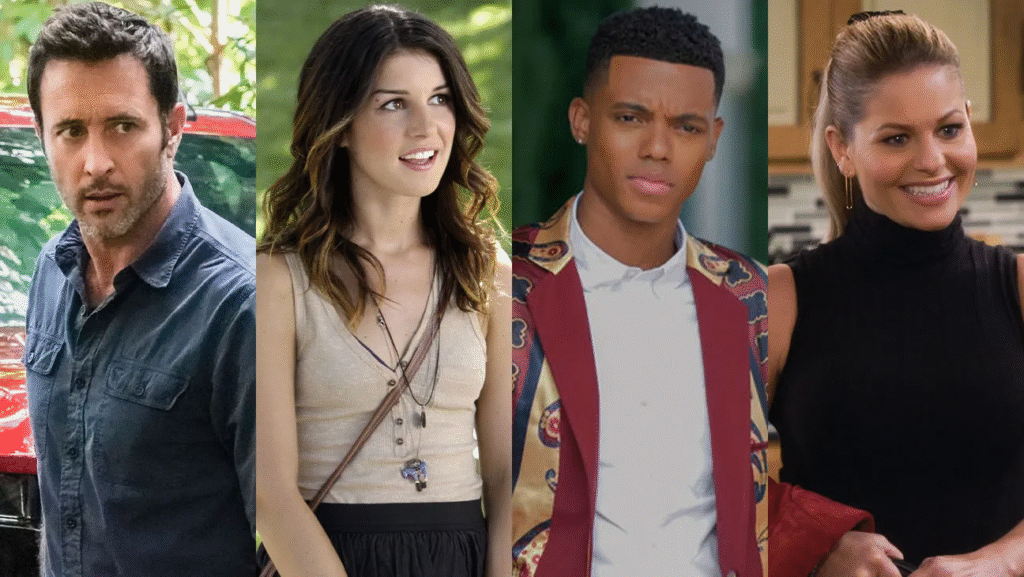
- Case Study: Bel-Air (Peacock): This dramatic reimagining of the iconic sitcom The Fresh Prince of Bel-Air took the show’s basic premise and transformed it into a serious, hour-long drama. It delves into the tensions of race, class, and identity that were only hinted at in the original comedy, making it relevant and compelling for a 2020s audience.
3. The Legacy Sequel: Passing the Torch
A hybrid model, the legacy sequel introduces a new generation of characters while strategically integrating original cast members in mentor or supporting roles. This allows the show to honor its roots while building a new story for the future.
- Case Study: Cobra Kai (Again): While a sequel, it also perfectly fits this model. The show gradually introduced a new generation of teen karate students, making them the central focus alongside Johnny and Daniel. This ensures the series can continue even as the original stars age, effectively passing the torch.
- Case Study: And Just Like That… (Max): The revival of Sex and the City is a prime example. It brings back the core quartet (minus Samantha, a narrative choice in itself) but places them in a new stage of life, navigating motherhood, career shifts, and loss in their 50s. It’s a direct continuation, but the tone and central conflicts have evolved to reflect the characters’ current ages.
4. The Straight Revival (The “Soft Reboot”)
This model attempts to recreate the original show’s magic as closely as possible, often with the original cast and a similar tone, picking up as if very little time has passed.
- Case Study: Fuller House (Netflix): This revival followed the original Full House formula almost beat-for-beat, with D.J. Tanner-Fuller taking on the Danny Tanner role in a house full of friends and family. It relied heavily on catchphrases, cameos, and a warm, nostalgic glow to appeal directly to fans of the original.
- Case Study: Will & Grace (NBC): The revival was launched with a successful viral video and then returned for new seasons that largely ignored the original series finale. It aimed to recapture the sitcom’s sharp, topical humor and chemistry between its four leads, banking on the audience’s desire to simply spend more time with these beloved characters.
The Secret Sauce: What Makes a TV Reboot Truly Successful?
For every Cobra Kai, there is a failed revival that fizzles out after one season. The difference between success and failure often comes down to a few critical factors.
- Honor the Heart, Don’t Recreate the Past: The most successful reboots understand the emotional core of the original—what made fans love it in the first place—and protect it at all costs. Cobra Kai understood it was about mentorship and rivalry. A failed reboot tries to replicate 1990s aesthetics and jokes verbatim, which feels dated and hollow.
- Update for Today (Responsibly): Society has changed. A reboot that fails to acknowledge modern sensibilities around diversity, inclusion, and social issues will feel tone-deaf. The successful reboot of One Day at a Time moved the family from white middle-class America to a Cuban-American family, tackling immigration, PTSD, and LGBTQ+ issues with heart and humor. It honored the original’s format of a socially-conscious family sitcom while making it profoundly relevant.
- Have a Story to Tell, Not Just a Brand to Exploit: The driving question cannot be “How can we make money from this IP?” It must be “What new, compelling story can we tell with these characters or this premise?” A reboot needs a narrative reason to exist. The Conners succeeded where other revivals faltered because it used the absence of Roseanne Barr’s character to explore the struggles of a working-class family in a post-industrial America, giving it a powerful, new dramatic engine.
The Pitfalls and Backlash: When Reboots Go Wrong
The path to revival is littered with missteps. Viewer skepticism is high, and studios can easily alienate the very fanbase they’re trying to attract.
- Alienating the Core Fanbase: Drastic changes to beloved characters or ignoring established canon can trigger a fierce backlash. The 2021 reboot of Gossip Girl on HBO Max was criticized by some for losing the glamour and specific social satire of the original, failing to connect with either old fans or a sufficiently large new audience.
- The “Woke” Criticism (and How to Navigate It): A common criticism leveled at modern reboots is that they are “too woke.” This often stems from a clumsy or inauthentic attempt to add diversity or modern politics. The key is integration, not tokenism. When new perspectives are woven organically into the story and characters (as in One Day at a Time), it enhances the show. When it feels like a checkbox, it breaks the audience’s immersion.
- Nostalgia-Over-Substance Trap: Some reboots rely so heavily on “remember this?” moments that they forget to write a good story. Fuller House was often cited as relying on callbacks over quality writing, making it a show that was more about the feeling of the original than being a strong series in its own right.
The Future of the Reboot: What’s Next for Classic TV?
The reboot trend shows no signs of slowing down. However, its form is evolving.
- The Animated-to-Live-Action Pipeline: Following the success of films like The Jungle Book and The Lion King, studios are looking to their animated catalogs for live-action series. A Moana series and a new Harry Potter series are in development for Disney+ and Max, respectively, aiming to expand those worlds in long-form format.
- Genre-Blending and Crossovers: Future reboots may not be straightforward. We could see genre shifts (a dramatic reboot of a classic comedy) or even crossovers between reboots, creating shared universes from classic TV properties.
- The International Reboot: As streaming platforms become more global, we may see American studios rebooting classic shows from other countries, and vice-versa, creating a new international exchange of intellectual property.
Frequently Asked Questions (FAQs)
1. What is the difference between a reboot, a revival, and a remake?
- Reboot: A general term for bringing a show back, but often implies a fresh start, sometimes ignoring previous continuity (e.g., Battlestar Galactica).
- Revival/Sequel Series: Continues the story of the original show with the same characters and continuity (e.g., Cobra Kai, Will & Grace).
- Remake: A new version of the original story, often shot-for-shot or very faithful to the initial plot (e.g., the 2019 Charmed reboot vs. the 1998 original).
2. Why are there so many reboots right now?
It’s a perfect storm of studio risk-aversion, the insatiable content demands of streaming services, and a powerful audience desire for nostalgic comfort viewing in a stressful world.
3. What classic shows are being rebooted in 2024/2025?
The landscape is always shifting, but recent and upcoming projects have included a Harry Potter series for Max, a Friday Night Lights revival in development, and new iterations of shows like The Wonder Years and Quantum Leap.
4. Are any original cast members usually involved in reboots?
It varies. Sequel series and legacy sequels often heavily feature original cast members (Cobra Kai, And Just Like That…). Reimaginings and remakes may include them in cameo roles or new parts, or not at all.
5. How can I find out if my favorite classic show is being rebooted?
Follow industry news on sites like The Hollywood Reporter, Variety, and Deadline. Social media, especially fan communities on Reddit and Twitter, are also often the first to report on rumors and confirmations.
6. What is the most successful TV reboot of all time?
While metrics vary, Cobra Kai is a top contender based on its critical acclaim, massive global popularity on Netflix, and its ability to revitalize the entire Karate Kid franchise. Other hugely successful examples include the Battlestar Galactica reimagining and the Doctor Who revival.
7. Why do some reboots fail?
Common reasons include a failure to understand the original’s appeal, poor writing that relies on nostalgia over substance, inauthentic attempts to be “modern,” and alienating the core fanbase with drastic, unwelcome changes.
8. Do reboots mean there are no original shows anymore?
Not at all. While reboots are highly visible, the “Peak TV” era has also produced an explosion of acclaimed original shows like Stranger Things, The Crown, The Bear, and Succession. Reboots and originals coexist, serving different audience segments and business needs.
9. How do streaming services like Netflix decide which shows to reboot?
They use a combination of data analytics (viewership of the original series on their platform), brand recognition studies, the availability and interest of key creative talent, and a strategic assessment of what genres or demographics they need to strengthen in their content library.
10. Is the reboot trend good or bad for television?
It’s a double-edged sword. On one hand, it can limit creative risk and crowd out new voices. On the other, when done with care and a clear creative vision, it can reintroduce timeless stories to new generations, provide satisfying continuations for fans, and even improve upon the original by addressing its flaws. The quality of the individual show is what ultimately matters.
In conclusion, the TV reboot is far more than a cynical cash grab. It is a complex, evolving art form that reflects our relationship with our own cultural history. It’s a dialogue between the past and the present, a negotiation between memory and modernity. By leveraging built-in nostalgia while daring to innovate, the most successful reboots do more than just bring classic shows back—they re-contextualize them, allowing them to resonate, comfort, and entertain all over again. As long as there are stories we love and new stories to tell about them, the classic TV show will never truly be gone; it will simply be waiting for its next cue to return.