Debt. For millions, it’s a constant, low-grade hum of financial anxiety. It’s the student loan statement that arrives like clockwork, the credit card balance that never seems to budge, and the car payment that eats into your disposable income. This burden isn’t just financial; it’s emotional and psychological, impacting relationships, career choices, and overall well-being.
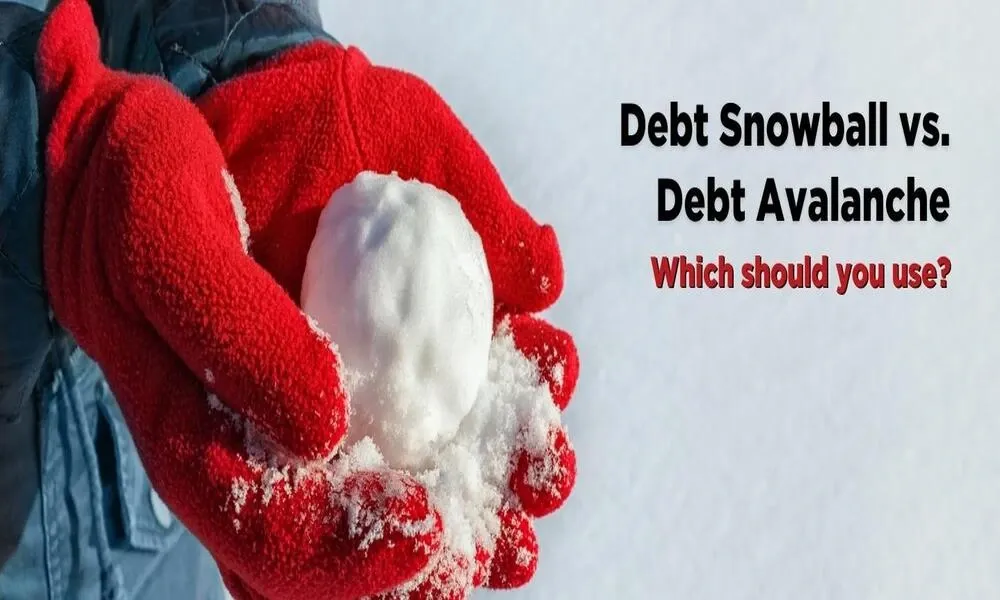
But what if you had a clear, proven, and actionable plan to not just manage your debt, but to obliterate it? This is where systematic debt repayment strategies come in. Among the most popular and effective are the Debt Avalanche and the Debt Snowball methods. Both are championed by financial experts, and both have one ultimate goal: to get you to zero. However, their paths to that destination—and their impact on your wallet and your willpower—differ significantly.
The question at the heart of your debt-free journey is a critical one: Which strategy will save you more money?
The mathematical answer is straightforward. The real-world, human-behavior answer is more nuanced. This in-depth guide will dissect both methods, providing you with the expertise, data, and psychological insights you need to make an informed decision. We will move beyond theory and into practical application, empowering you to choose the strategy that aligns with your financial situation, your personality, and your goals. By the end of this article, you will have a complete understanding of how to launch your own debt-free attack, saving you thousands of dollars and years of stress.
Part 1: Laying the Groundwork – Understanding the Core Principles
Before we dive into the specifics of each method, it’s crucial to understand the foundational principles they share. Both the Avalanche and the Snowball are not magic wands; they are structured frameworks that require discipline and a specific approach to your finances.
The Common Foundation: The Debt List and Minimum Payments
The first step for both strategies is identical and non-negotiable:
- Gather Your Data: Compile a complete list of all your non-mortgage debts. This includes credit cards, personal loans, student loans, auto loans, medical bills, etc.
- Create Your Debt Inventory: For each debt, list the following:
- Creditor: Who you owe the money to.
- Total Current Balance: The exact amount you owe today.
- Annual Percentage Rate (APR): The interest rate you are being charged. This is the cost of your debt.
- Minimum Monthly Payment: The smallest amount you must pay each month to remain in good standing.
This list is your battlefield. Knowing your enemy is the first step to defeating it.
The Golden Rule: Never Miss a Minimum Payment
Regardless of the strategy you choose, you must always make the minimum monthly payment on every single debt. This protects your credit score from damage and avoids late fees, which only add to your debt burden. The strategies work by telling you what to do with any extra money you can put toward debt repayment each month.
The Concept of a “Debt Attack Payment”
This is the engine of your debt freedom plan. It’s the amount of money—above and beyond all your minimum payments—that you can consistently throw at your debt each month. To find this number, you need to create a bare-bones budget.
- Calculate your total monthly income.
- Subtract your essential living expenses (housing, utilities, groceries, transportation).
- The remainder, after also allocating a small, realistic amount for discretionary spending, is your “debt attack payment.”
The larger this payment, the faster you will become debt-free. This often involves making temporary sacrifices—cutting subscription services, reducing dining out, or finding ways to increase your income through a side hustle.
Part 2: The Debt Avalanche – The Mathematical Masterpiece
The Debt Avalanche is the strategy favored by pure mathematicians, financial planners, and anyone whose primary goal is to minimize the total interest paid over the life of their debt.
How the Debt Avalanche Works
The process is methodical and logical:
- Order Your Debts by Interest Rate: List your debts from the highest APR to the lowest APR. The balance of the debt is irrelevant for this ordering.
- Attack the Highest-Rate Debt: You will make only the minimum payments on all your debts except the one with the highest interest rate.
- Deploy Your “Debt Attack Payment”: Every extra dollar of your “debt attack payment” is focused on the debt at the top of the list—the one with the highest APR.
- Roll Over the Payment: Once you have completely paid off the first debt, you take the entire amount you were paying toward it (the minimum payment + your entire “debt attack payment”) and apply it to the next debt on the list—the one with the second-highest APR.
- Repeat: You continue this process, “avalanching” the growing payment down your list as each debt is eliminated, until you are debt-free.
A Concrete Example of the Debt Avalanche
Let’s assume you have the following debts and a “debt attack payment” of $500 per month.
| Debt | Balance | APR | Minimum Payment |
|---|---|---|---|
| Credit Card A | $6,000 | 22.99% | $180 |
| Personal Loan | $10,000 | 9.5% | $200 |
| Student Loan | $25,000 | 5.5% | $300 |
| Total | $41,000 | $680 |
- Your Total Monthly Payment: $680 (minimums) + $500 (attack) = $1,180
Phase 1: Attack Credit Card A (22.99% APR)
- You pay the minimum on the Personal Loan ($200) and Student Loan ($300).
- You throw everything else at Credit Card A: $180 (its minimum) + $500 (your attack payment) = $680/month.
- At this rate, you will pay off the $6,000 credit card in approximately 9 months.
Phase 2: Attack the Personal Loan (9.5% APR)
- Credit Card A is gone! You now have $680 freed up.
- You add this to the Personal Loan’s minimum payment: $200 + $680 = $880/month toward the Personal Loan.
- You continue paying the $300 minimum on the Student Loan.
- With this aggressive payment, the $10,000 Personal Loan will be gone in about 12 months.
Phase 3: Attack the Student Loan (5.5% APR)
- The Personal Loan is gone! You now have $880 freed up.
- You add this to the Student Loan’s minimum payment: $300 + $880 = $1,180/month toward the Student Loan.
- The remaining ~$21,500 on the Student Loan will be demolished in about 19 months.
Total Time to Debt Freedom with Avalanche: Approximately 40 months.
Total Interest Paid: Approximately $5,800.
The Undeniable Advantage of the Avalanche
The math is clear. By targeting the most expensive debt first—the one costing you the most money every single day—you are systematically eliminating the biggest drag on your finances. You are optimizing for financial efficiency, ensuring that every extra dollar you pay goes toward saving you the most in interest charges. Over time, especially with large, high-interest debts, this can lead to substantial savings.
Part 3: The Debt Snowball – The Psychological Powerhouse
The Debt Snowball, popularized by personal finance expert Dave Ramsey, takes a different approach. It prioritizes human psychology and behavioral momentum over pure mathematical optimization.
How the Debt Snowball Works
The process here is designed for quick wins:
- Order Your Debts by Balance: List your debts from the smallest total balance to the largest total balance. The interest rate is irrelevant for this ordering.
- Attack the Smallest Debt: You will make only the minimum payments on all your debts except the one with the smallest balance.
- Deploy Your “Debt Attack Payment”: Every extra dollar of your “debt attack payment” is focused on the debt at the top of the list—the smallest one.
- Celebrate and Roll Over: Once you pay off that first, smallest debt, you celebrate the victory. Then, you take the entire amount you were paying toward it and apply it to the next smallest debt on the list.
- Repeat: As you pay off each debt, the “snowball” of your payment grows larger and gains momentum, making it easier to knock out progressively larger debts.
A Concrete Example of the Debt Snowball
Using the same debt scenario from before, but reordered by balance:
| Debt | Balance | APR | Minimum Payment |
|---|---|---|---|
| Credit Card A | $6,000 | 22.99% | $180 |
| Personal Loan | $10,000 | 9.5% | $200 |
| Student Loan | $25,000 | 5.5% | $300 |
| Total | $41,000 | $680 |
- Your Total Monthly Payment: Still $1,180
Phase 1: Attack Credit Card A (Smallest Balance: $6,000)
- This is the same as the Avalanche in this specific case because the smallest balance also has the highest rate. You pay it off in 9 months with $680/month.
Phase 2: Attack the Personal Loan (Next Smallest: $10,000)
- Again, identical to the Avalanche so far. You pay it off in 12 months with $880/month.
Phase 3: Attack the Student Loan (Largest Balance: $25,000)
- Identical to the Avalanche. Paid off in 19 months.
In this specific example, the outcome is the same: 40 months, ~$5,800 in interest. This is because the debts were conveniently ordered by both balance and interest rate. But let’s change the scenario to see the Snowball’s true nature.
The Snowball in Action: A Different Scenario
Imagine your debt list looks like this:
| Debt | Balance | APR | Minimum Payment |
|---|---|---|---|
| Store Credit Card | $1,500 | 19% | $45 |
| Personal Loan | $4,000 | 8% | $120 |
| Credit Card B | $7,000 | 24% | $210 |
- Your “Debt Attack Payment”: $300
According to the Avalanche (Order by APR):
- Attack Credit Card B (24% APR) first. This is the mathematically optimal choice.
- Total time to debt freedom: ~22 months.
- Total interest paid: ~$1,850.
According to the Snowball (Order by Balance):
- Attack the Store Credit Card ($1,500) first, even though its rate is lower.
- You will pay off the $1,500 store card in just 4-5 months. That’s a quick win!
- You then roll the $45 + $300 = $345 onto the Personal Loan. Combined with its $120 minimum, you pay $465/month. It’s gone in about 5 more months.
- Finally, you attack Credit Card B with $465 + $210 = $675/month. It’s gone in about 7 months.
- Total time to debt freedom: ~16-17 months.
- Total interest paid: ~$2,050.
The Undeniable Advantage of the Snowball
Look at the numbers above. The Avalanche saves about $200 in interest, but the Snowball gets you debt-free 5-6 months sooner. How? Because of the psychological boost of eliminating that first debt quickly.
The Snowball provides:
- Quick Wins: Paying off an entire debt in a few months provides a massive sense of accomplishment.
- Behavioral Momentum: Each “win” builds confidence and reinforces the habit of aggressive debt repayment. It turns a marathon of misery into a series of achievable sprints.
- Simplified Focus: You only have to worry about one small target at a time, which reduces feelings of being overwhelmed.
- Increased Adherence: For many people, the positive feedback from the Snowball makes them more likely to stick with the plan long-term, even if it’s not mathematically perfect. Sticking with a “good” plan is almost always better than quitting a “perfect” one.
Part 4: The Head-to-Head Comparison: Which Strategy Truly Saves You More?
So, we return to the core question: Which strategy will save you more money?
The Case for the Debt Avalanche
- Mathematical Superiority: In a vacuum, the Avalanche will always save you more money on interest than the Snowball, provided you stick with it for the entire duration. It is the financially optimal algorithm.
- Faster Overall Debt Elimination (Usually): By killing high-interest debt first, you reduce the total cost of your debt portfolio more quickly, which often (but not always, as seen in the second example) leads to a shorter overall repayment period.
- Best For: Individuals who are highly disciplined, motivated by data and spreadsheets, not discouraged by a lack of quick wins, and whose debts are primarily high-interest (e.g., credit cards).
The Case for the Debt Snowball
- Psychological Superiority: The Snowball is engineered for human behavior. The feeling of progress is a powerful motivator that can prevent burnout and abandonment of the plan.
- Builds Consistency: The series of small wins helps build the financial muscle and discipline needed to tackle larger financial goals later in life.
- Can Actually Be Faster: As our second example showed, the increased momentum and motivation can sometimes lead to a faster overall debt-free date than the Avalanche, even if you pay slightly more in interest.
- Best For: Individuals who feel overwhelmed by their debt, need quick wins to stay motivated, have struggled with financial discipline in the past, or whose debt list has several small balances they can quickly eliminate.
The Verdict: It’s Not Just About the Math
If your only criterion is minimizing interest paid, the Debt Avalanche is the undisputed winner. It is the most efficient path.
However, personal finance is, first and foremost, personal. The “best” strategy is the one you will actually execute and stick with until the end.
For many people, the slightly higher cost of the Snowball is a worthwhile investment in their own psychology. Paying an extra $200 in interest over a year and a half to guarantee you don’t give up and stay in debt for another five years is an excellent return on investment.
Think of it this way: The Avalanche saves you money on paper. The Snowball saves you from quitting in reality.
Read more: Beyond the Headlines: The Local Impact of National Immigration Policy
Part 5: Beyond the Binary – Advanced Strategies and Hybrid Approaches
The choice isn’t always a strict either/or. You can blend these strategies or consider other factors.
The Debt Snowflake Method
This is a fantastic companion to either the Avalanche or Snowball. “Snowflaking” involves finding tiny, extra amounts of money throughout your month and immediately applying them to your target debt. This could be:
- A $10 rebate check
- Money from selling an old item online
- $5 saved by skipping a coffee
- A small side hustle payment
These “snowflakes” might seem insignificant, but when applied directly to your principal balance, they can significantly reduce the compounding interest and shave months off your timeline.
The Hybrid “Avalanche-Snowball” Approach
You can create a custom strategy that balances math and motivation.
- Start with a Quick Snowball: If you have two or three very small debts (e.g., under $500), knock them out first in quick succession using the Snowball method. This gives you an immediate momentum boost.
- Switch to the Avalanche: Once the small psychological wins are achieved, re-sort your remaining debts by interest rate and switch to the Avalanche method to maximize interest savings for the long haul.
This approach gives you the best of both worlds: early motivation followed by long-term efficiency.
Considering Other Factors
- Debt Type: Some people prefer to pay off debts with emotional weight first, like a personal loan from a family member, regardless of the interest rate.
- Cash Flow: If a particular debt’s minimum payment is straining your monthly budget, you might target it with the Snowball method just to free up that cash flow, even if it’s not the smallest or highest-rate debt.
Part 6: Your Action Plan – How to Get Started Today
Knowledge is useless without action. Here is your step-by-step plan to launch your debt-free journey.
- Face the Numbers: Gather your statements and create your complete Debt Inventory List. This is the most important step. You cannot fix what you haven’t measured.
- Establish Your Budget: Use a budgeting method (like the 50/30/20 rule or a zero-based budget) to determine your monthly “Debt Attack Payment.” Be ruthless in cutting non-essential spending to make this number as large as possible.
- Choose Your Strategy:
- Are you a disciplined, numbers-driven person who won’t get discouraged? Choose the Debt Avalanche.
- Do you feel overwhelmed and need quick wins to keep going? Choose the Debt Snowball.
- Unsure? Try the Hybrid Approach. Knock out any tiny debts first, then switch to the Avalanche.
- Set Up Your Payments:
- Avalanche: Set up automatic minimum payments for all debts. Manually make your large “attack payment” to the highest-interest debt each month.
- Snowball: Set up automatic minimum payments for all debts. Manually make your large “attack payment” to the smallest-balance debt.
- Track Your Progress: Use a free app, a spreadsheet, or a simple chart on your fridge. Visually seeing your debts decrease and your progress bars fill up is incredibly motivating.
- Celebrate Milestones: When you pay off a debt, celebrate! Do something small and rewarding that doesn’t break the bank. Acknowledge your hard work.
- Don’t Add New Debt: Put your credit cards away. Use a debit card or cash for purchases while you are on this journey. The goal is to dig out of the hole, not to keep digging it deeper.
Conclusion: The Best Strategy is the One You Start
The debate between the Debt Avalanche and the Debt Snowball is a valuable one, but it should not be a barrier to entry. Both are infinitely better than making only minimum payments or having no plan at all.
The Debt Avalanche is the cool, calculated mathematician. It is the most direct route to saving money on interest.
The Debt Snowball is the encouraging coach. It is the most reliable route to building the habits and momentum needed to cross the finish line.
Ultimately, the strategy that will save you the most money is the one that you personalize, commit to, and follow with relentless consistency. Your debt did not appear overnight, and it won’t disappear overnight. But with either of these powerful strategies, you are guaranteed to make systematic, measurable progress.
Stop debating. Start doing. Choose your method, make your list, and make your first powerful “attack payment” today. Your debt-free future is waiting.
Read more: 2024 Election Countdown: Key Battleground States and the Issues Driving Voters
Frequently Asked Questions (FAQ)
Q1: I’ve heard of the “Debt Snowball” but what exactly is the “Debt Avalanche”?
The Debt Avalanche is a debt repayment strategy where you focus on paying off your debts in order of highest interest rate (APR) to lowest. You make minimum payments on all debts and put any extra money toward the debt with the highest interest rate first. Once that’s paid off, you roll the total payment amount to the next highest-rate debt, and so on. It’s designed to minimize the total interest you pay over time.
Q2: The math clearly shows the Avalanche saves more money. Why would anyone choose the Snowball?
While the Avalanche is mathematically superior, the Snowball is psychologically superior. Many people struggle with debt not because of a lack of math skills, but because of a lack of motivation and feelings of being overwhelmed. The Snowball method provides quick wins by paying off small debts fast, which builds momentum, confidence, and the discipline needed to stick with the plan long-term. For many, this behavioral benefit far outweighs the slightly higher interest cost.
Q3: Can I use a combination of both methods?
Absolutely. A popular hybrid approach is to start with the Snowball to knock out a few very small balances for a quick motivational boost. Once those are cleared, you then switch to the Avalanche method, targeting the remaining higher-interest debts to save the most money on interest in the long run. This gives you the best of both worlds.
Q4: Should I consider consolidating my debts with a personal loan or balance transfer card?
Debt consolidation can be a powerful tool to use in conjunction with the Avalanche or Snowball method. A balance transfer credit card with a 0% introductory APR or a lower-interest personal loan can reduce your overall interest burden, making your “debt attack payment” more effective. However, consolidation does not erase debt; it just moves it. You must have the discipline to not run up new debts on the old credit cards and to aggressively pay down the new consolidated loan.
Q5: What if I have a debt with a cosigner? Should I prioritize that?
This is a valid consideration beyond just interest rates. If you have a debt with a cosigner (e.g., a parent), you may feel a moral obligation to prioritize paying it off to release them from that liability, even if the interest rate isn’t the highest. This is a personal decision that blends financial logic with relationship management.
Q6: How do I stay motivated during a long debt repayment journey?
- Track Visually: Use a debt-free chart or an app that shows your decreasing balances.
- Celebrate Small Wins: Acknowledge every paid-off debt, no matter how small.
- Find a Support System: Share your journey with a trusted friend or an online community for accountability.
- Remember Your “Why”: Constantly remind yourself of the goal—financial freedom, less stress, saving for a house, etc.
Q7: Should I pause my retirement savings to pay off debt faster?
This is a complex question. Generally, if you have high-interest debt (e.g., credit cards over 10% APR), it’s often wise to temporarily reduce retirement contributions to the minimum required to get any employer match (which is free money) and throw everything else at the debt. The guaranteed return you get by eliminating high-interest debt is hard to beat through investing. For low-interest debt (e.g., below 5-6%), it’s often better to continue investing while paying down the debt steadily. Consulting a fee-only financial advisor can provide personalized guidance.
Q8: What’s the first step if I feel completely overwhelmed by my debt?
The very first step is to create your complete Debt Inventory List. Write down every debt, its balance, its interest rate, and its minimum payment. This single act transforms an abstract, scary monster into a concrete, manageable list of numbers. From there, you can make a plan. Taking that first step is the most powerful thing you can do.