For nearly two decades, the roadmap for blockbuster success in Hollywood was a well-worn, highly profitable path. It was a strategy built on shared universes, spandex-clad heroes, and the comforting predictability of a post-credits scene. The formula was simple: invest hundreds of millions in established Intellectual Property (IP), add spectacle, and watch the global box office receipts roll in. This era, dominated by the Marvel Cinematic Universe (MCU) and its rivals, created a seemingly unbreakable paradigm. But in 2023, the foundation of that paradigm cracked. The simultaneous release of Greta Gerwig’s pastel-pink fantasia Barbie and Christopher Nolan’s stark, atomic-age drama Oppenheimer created a cultural tsunami—”Barbenheimer“—that did more than just generate staggering revenue. It exposed a growing audience appetite for something new, something different, and something more substantive than the 32nd installment in a superhero saga. This moment forces a critical question: Is the age of the superhero-centric, IP-driven blockbuster finally waning, and if so, what is emerging to take its place?
This article will analyze the converging trends that led to this inflection point. We will dissect the very real phenomenon of “superhero fatigue,” explore the lessons of the “Barbenheimer” phenomenon, and chart a course for the future of the American blockbuster—a future that is likely to be more diverse, more auteur-driven, and more reliant on a new kind of cinematic “event.”
Part 1: The Age of Superhero Saturation and the Seeds of Fatigue
To understand where we’re going, we must first understand how we got here. The modern blockbuster era was fundamentally shaped by the unprecedented success of the MCU. Starting with Iron Man in 2008, Kevin Feige and Marvel Studios executed a masterplan: creating an interconnected narrative across multiple films and characters, culminating in large-scale “event” movies like The Avengers. It was a revolutionary approach to serialized storytelling on the big screen, and it paid off handsomely.
For years, audiences were enthralled. They followed character arcs across dozens of films, reveled in the interconnected lore, and made opening weekend a weekly cultural event. Studios, seeing the blueprint for success, rushed to create their own “cinematic universes.” The result was an overwhelming deluge of superhero content. At its peak, it wasn’t uncommon for multiple major superhero films to be released per quarter, not to mention the expansion into television with numerous series on Disney+ and other platforms.
This saturation is the primary catalyst for what is commonly termed “superhero fatigue.” However, it’s crucial to define this term more precisely. It is not necessarily a fatigue with the concept of superheroes, but rather a fatigue with the formulaic execution that has come to define the genre.
The Symptoms of Fatigue:
- Formulaic Storytelling: Many recent superhero films have been criticized for following a predictable three-act structure, punctuated by CGI-heavy third acts involving a sky beam, a swarm of identical enemies, or a battle in a destroyed city. The “Marvel formula” of quippy humor undercutting serious moments, while initially fresh, began to feel repetitive and tonally inconsistent.
- The Dilution of Stakes: When characters die only to be resurrected, when multiverses introduce infinite variants, and when world-ending threats are resolved every single time, the narrative stakes evaporate. Audiences become less invested because the outcome feels pre-ordained and consequence-free.
- The Visual Homogeny: Over-reliance on green-screen and CGI has led to a visual sameness in many blockbusters. The “battle in a grey, messy CGI landscape” became a meme for a reason. It often lacks the tactile, practical weight that makes action feel visceral and real.
- Quality Control and “Content” Culture: The rush to feed the streaming beast and maintain universe continuity has led to a perception of some projects as mere “content” rather than carefully crafted films. This was evident in both certain film sequels (Thor: Love and Thunder‘s tonal whiplash) and several Disney+ series that felt stretched and underwritten.
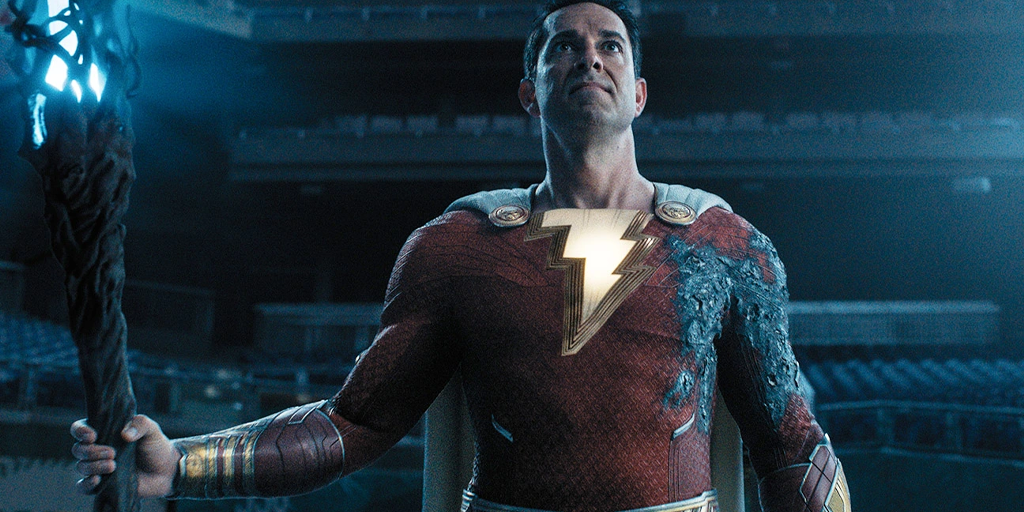
The box office performance in 2023 and 2024 tells the story. While Guardians of the Galaxy Vol. 3 succeeded by providing a heartfelt conclusion to a beloved, character-driven trilogy, other films like The Marvels, Ant-Man and the Wasp: Quantumania, and The Flash significantly underperformed. These weren’t failures of marketing alone; they were signals that a segment of the audience was becoming more selective, choosing to engage only with projects that promised a unique experience rather than just another chapter in a sprawling saga.
Part 2: The “Barbenheimer” Phenomenon – A Case Study in the New Blockbuster
On the surface, the pairing of Barbie and Oppenheimer was a joke. The contrast was absurd: one a vibrant, plastic, feminist comedy about a doll, the other a grim, three-hour, biographical thriller about the father of the atomic bomb. The internet memed the dichotomy relentlessly. But what started as a joke evolved into a genuine cultural movement. Audiences didn’t just see one or the other; they made a day of it. They engaged in “double-feature” dressing, wearing pink to Barbie and somber attire to Oppenheimer. The phenomenon became the story itself.
The result was a box office explosion that defied all conventional Hollywood wisdom. Barbie earned over $1.4 billion globally, becoming the highest-grossing film ever by a female director solo. Oppenheimer soared past $950 million, making it the highest-grossing biopic of all time and a staggering number for an R-rated, dialogue-heavy historical drama. Together, they revitalized the cinema-going experience post-pandemic.
So, what are the core lessons of “Barbenheimer” for the future of the blockbuster?
Lesson 1: The Power of the Auteur’s Vision
Both films are unmistakably the work of distinct, visionary directors. Greta Gerwig infused Barbie with her sharp, witty, and emotionally intelligent screenwriting, balancing absurd humor with a profound exploration of patriarchy, mortality, and identity. Christopher Nolan delivered Oppenheimer with his signature practical effects, immersive IMAX cinematography, and a complex, non-linear narrative structure. Audiences weren’t just going to see a movie about a doll or a physicist; they were going to see a Greta Gerwig film and a Christopher Nolan film. The director was the brand, and their unique vision was the primary selling point. This is a stark contrast to the often director-as-a-cog model of franchise filmmaking.
Lesson 2: Counter-Programming as Co-Promotion
Historically, counter-programming meant releasing a small indie film against a giant blockbuster to capture a different audience. “Barbenheimer” reinvented this concept. The extreme contrast between the two films was the point. It created a meta-narrative that was more compelling than any single film’s plot. The conversation wasn’t just “Should I see Barbie?” but “How are you doing your Barbenheimer double-header?” The two films, rather than cannibalizing each other’s audience, created a rising tide that lifted both boats, proving that a crowded release calendar can be an opportunity, not a threat, if the films offer distinctly different experiences.
Lesson 3: The Event-ization of Cinema
“Barbenheimer” wasn’t just about watching two movies; it was about participating in a shared cultural moment. The social media frenzy, the coordinated outfits, the posting of ticket stubs—it transformed a trip to the movies from a passive activity into an active, communal event. This taps into a deep-seated human desire for shared experience, something that streaming at home can never fully replicate. The blockbuster of the future must offer more than just spectacle; it must offer an event worth leaving the house for.
Lesson 4: Originality Within an IP Framework
It’s important to note that Barbie is, technically, IP. Mattel is a globally recognized brand. However, Gerwig’s approach was not to make a straightforward, commercial toy advertisement. She used the IP as a springboard for a wildly original, subversive, and deeply personal satire. Similarly, while J. Robert Oppenheimer is a historical figure, Nolan’s treatment was a bold, artistic, and challenging take. The lesson is not that IP is dead, but that the execution must feel fresh, auteur-driven, and audacious. It’s about recontextualizing familiar elements into something new and surprising.
Read more: The “Quiet Hit” Syndrome: Why Shows Like ‘The Bear’ Are Redefining TV Success
Part 3: The Emerging Blueprint for the Future Blockbuster
The convergence of superhero fatigue and the “Barbenheimer” effect points toward a new, more nuanced blueprint for blockbuster success. The future is not a complete abandonment of the old, but a synthesis and an expansion.
1. The Rise of the “Auteur-Buster”
The most significant shift will be the renewed leverage given to singular directorial voices. Studios will see the value in betting on filmmakers with a strong, marketable vision and giving them the keys to large-scale projects. We are already seeing this trend:
- Superhero Recalibration: Projects like Joker: Folie à Deux (directed by Todd Phillips) and The Batman (directed by Matt Reeves) are dark, gritty, and clearly auteur-driven, existing outside the main superhero universes. They are closer to psychological thrillers or noir detective stories that happen to feature comic book characters.
- Original Epics: Directors like Denis Villeneuve (Dune), Nolan, and Jordan Peele are proving that original (or adapted, but not necessarily “comic-book”) ideas can be massive, event-level blockbusters if handled with scale and directorial authority. Villeneuve’s Dune is a masterclass in world-building that feels both epic and intimate, a stark contrast to the chaotic CGI of lesser franchise films.
2. Genre Diversity at Scale
The blockbuster will no longer be synonymous with sci-fi and superheroes. We are entering an era where a well-made film in any genre, if given a large budget and ambitious scope, can become a box office juggernaut.
- Horror: Films like Nope combined blockbuster-scale spectacle with horror and social commentary.
- Musicals: While a tricky genre, the right musical, like Wonka, can blend nostalgia, song, and heart into a global hit.
- Historical Drama: Oppenheimer proved that a talky, three-hour historical piece could be one of the most thrilling cinematic experiences of the year.
- Action-Comedy: The John Wick franchise has shown that original, world-built action with a unique aesthetic can spawn a hugely successful universe.
3. The “Mid-Budget” Renaissance, But Bigger
The 2000s and 2010s saw the “death of the mid-budget movie,” as studios poured resources into tentpoles and left smaller films to indies. The future may see a hybrid model: the “High-Mid-Budget” film. These are movies budgeted in the $50-$100 million range (as opposed to $200M+), which allows for significant scale and star power while mitigating financial risk. This budget range is where directorial vision can flourish with less corporate oversight and where more original concepts can be greenlit. Anyone But You proved a sleeper hit, showing the power of a well-executed, star-driven romantic comedy.
4. The Evolving Role of Legacy IP and Shared Universes
IP is not going away. However, its application is changing. The “cinematic universe” model is likely to become more selective and curated. The failed attempts by other studios (the Dark Universe, the Sony Spider-Verse without Spider-Man) show it’s not a guaranteed formula. The future of IP will look more like:
- Contained, Director-Driven Stories: Like The Batman.
- Limited Series and “Event” Miniseries: Some stories may be better told as a high-budget, limited-run series on streaming, attracting top talent without a decade-long commitment.
- Brands as Springboards: The Barbie model—using a known brand to launch a wildly creative and unexpected story.
5. The Premium Large Format (PLF) Experience
Oppenheimer’s massive success on IMAX screens highlighted a crucial economic reality. Audiences are willing to pay a premium price for a premium experience that cannot be replicated at home. The future blockbuster will be engineered for PLF screens like IMAX, Dolby Cinema, and 4DX. The sound design, cinematography, and scale will be crafted to make seeing the film in a standard format feel like a compromise. This creates a value proposition that justifies the ticket price and reinforces cinema as a destination.
Conclusion: A More Hopeful and Diverse Future
The American blockbuster is not dying; it is evolving. The period of superhero dominance was a specific phase in cinematic history, one that produced incredible art and entertainment. But all cycles must end. The “fatigue” audiences are experiencing is a healthy market correction—a demand for more variety, more directorial personality, and more substantive stories.
The “Barbenheimer” phenomenon was the perfect storm that illuminated this path forward. It proved that audiences crave originality, respect intelligence, and yearn for shared cultural events. The blockbuster of the future will be less about a specific genre and more about a specific quality: the audacity of a singular vision, executed on a scale that demands to be seen on the big screen.
The roadmap is no longer a single, well-worn path. It is a sprawling, exciting map with multiple routes to success. For filmmakers, it’s an invitation to be bold. For studios, it’s a challenge to be brave. And for audiences, it’s the promise of a cinematic landscape that is once again vibrant, unpredictable, and endlessly captivating. The next blockbuster era won’t be built by superheroes alone, but by the limitless power of great stories, told well.
Read more: Beyond Taylor and Beyoncé: The 5 American Artists Dominating Streaming Right Now
FAQ Section
Q1: Is the superhero genre completely dead now?
Absolutely not. The genre is simply maturing and facing more competition. There is still a huge audience for superhero films, but the era of automatic box office success for every release is over. Future superhero films will need to be exceptionally well-made, offer a unique directorial vision, or tell more self-contained, character-driven stories to succeed. We are likely to see fewer films in the genre, but potentially higher quality ones.
Q2: Was “Barbenheimer” just a fluke? Can it be replicated?
It was a unique cultural moment that cannot be artificially recreated. The specific combination of two highly anticipated films from acclaimed directors, with a perfect storm of internet memes and audience participation, was a phenomenon. However, the lessons are replicable. Studios can learn to schedule contrasting films to create a complementary, rather than competitive, environment and to market the unique vision of the director to build hype.
Q3: Does this mean there’s no place for shared universes anymore?
Shared universes are not dead, but the model is evolving. The “cinematic universe” that requires audiences to watch dozens of hours of content to understand a new film is showing its limitations. The future may lie in smaller, more focused universes (like the John Wick or Planet of the Apes franchises) or in allowing different directors to create their own self-contained stories within a broader IP, without requiring constant crossover.
Q4: How can studios justify taking big risks on original ideas when IP is safer?
The data is beginning to show that relying solely on legacy IP is not safer. Underperformances like The Flash, Indiana Jones and the Dial of Destiny, and The Marvels represent massive financial losses. A $100 million gamble on a brilliant, original script from a trusted filmmaker is now arguably less risky than a $300 million gamble on a tired IP that audiences are bored with. The success of Everything Everywhere All at Once, Barbie, and Oppenheimer provides a new, viable business model based on quality and innovation.
Q5: What does this shift mean for movie theaters?
It’s a reason for profound optimism. Theatres thrive on offering experiences that cannot be had at home. The move towards “event-ized” cinema and films designed for Premium Large Formats (PLF) is the industry’s strongest weapon against the convenience of streaming. By focusing on creating must-see, big-screen events, theaters can secure their future as a vital part of the cultural ecosystem.
Q6: As an aspiring filmmaker, what should I take from this trend?
Focus on developing your unique voice. The market is opening up for distinctive, passionate storytelling. Don’t try to mimic the Marvel formula; that era is passing. Instead, hone your craft, write compelling characters, and think about how to create a cinematic experience. The industry is starting to value originality and directorial perspective more than the ability to seamlessly fit into a corporate machine. Your vision is your greatest asset.