
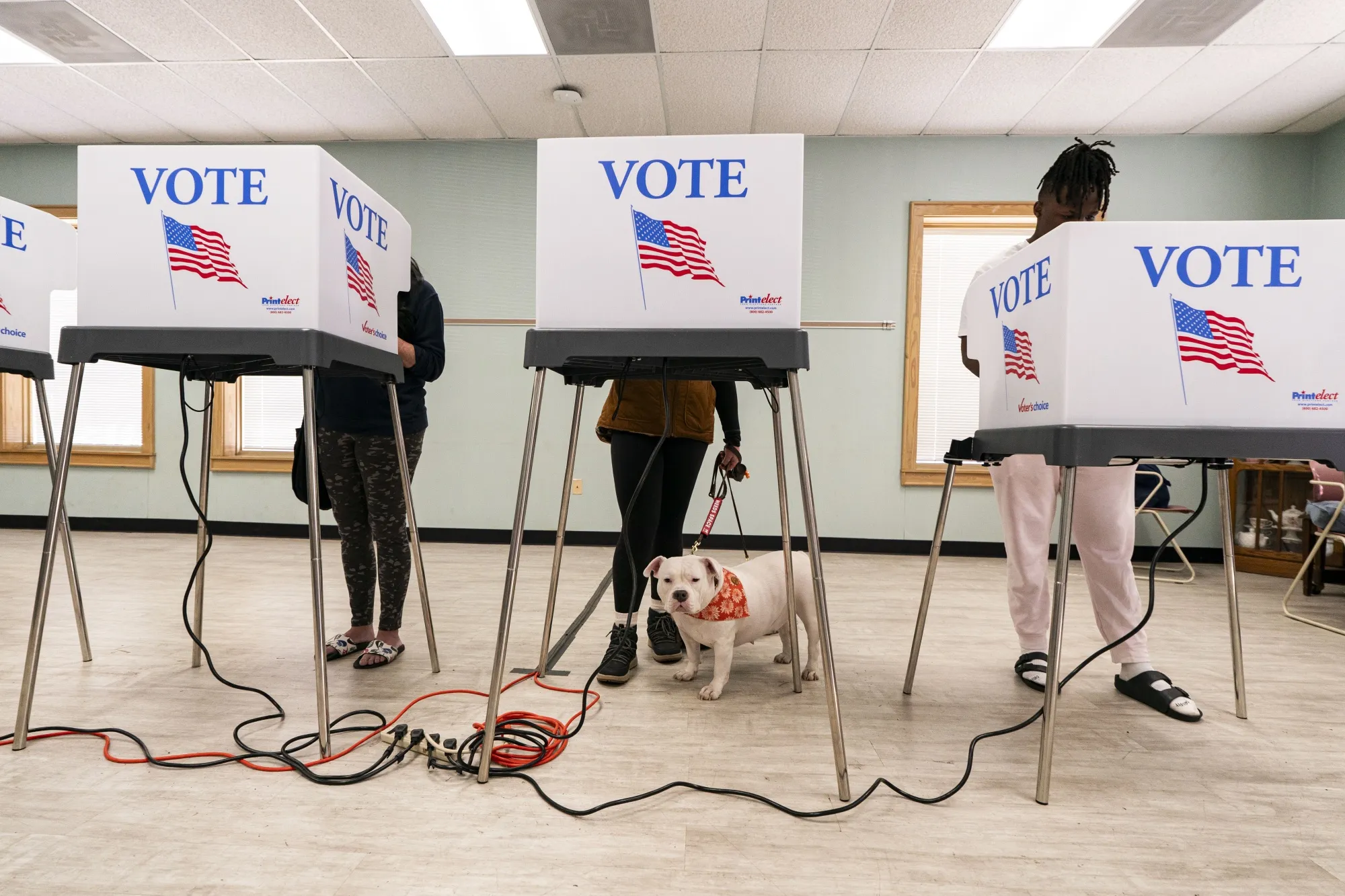
The right to vote is the bedrock of American democracy, a principle forged in revolution and refined through centuries of struggle. Yet, as the United States approaches the 2024 presidential election, the mechanisms of this fundamental right—how we vote, when we vote, and who has access to the ballot—are undergoing the most significant and contentious transformation in a generation. Following the 2020 election, which saw unprecedented changes to voting procedures due to the COVID-19 pandemic and record-breaking turnout, state legislatures have embarked on a frenetic pace of lawmaking, fundamentally altering the electoral landscape.
This is the new “Battle for the Ballot.” It is not a single conflict but a multifaceted war being waged in statehouses, courtrooms, and court of public opinion. On one side are those who argue that new, stricter laws are essential to fortify election integrity and restore public confidence. On the other are those who contend these laws are solutions in search of a problem, creating unnecessary barriers that disproportionately disenfranchise minority, elderly, and disabled voters. The outcome of this battle will not only influence the results in November 2024 but will also set a precedent for how American elections are conducted for decades to come. This article will delve into the origins of this legislative surge, analyze the key types of laws being enacted, explore their potential impact on voters and electoral outcomes, and examine the legal challenges that will ultimately determine their fate.
Section 1: The Genesis of a Legislative Tsunami – The Post-2020 Environment
To understand the current state of play, one must first look back at the seismic events of the 2020 election.
1.1 The Pandemic and the Expansion of Voting Access
The COVID-19 pandemic forced states to rapidly adapt their voting systems to ensure public safety. Many states, both red and blue, temporarily expanded access to voting through methods that had previously been limited or heavily debated. These changes included:
- Widespread Mail-in Voting: States like California, Nevada, and New Jersey mailed ballots to all registered voters, while many others loosened eligibility requirements for absentee voting.
- Ballot Drop Boxes: The deployment of secure, unattended drop boxes for returning mail ballots saw a massive increase.
- Extended Early Voting Periods: States offered more days and hours for in-person early voting to reduce crowding on Election Day.
- Private Funding for Elections: Some jurisdictions accepted private grants, often from non-profit organizations like the Center for Tech and Civic Life (funded by Meta’s Mark Zuckerberg), to help administer elections during the pandemic, a practice critics dubbed “Zuckerbucks.”
The result was a historic election. According to the U.S. Census Bureau, nearly 70% of the citizen voting-age population voted in 2020, the highest rate since 1992. Over 100 million Americans voted by mail, a staggering increase from previous cycles.
1.2 The “Big Lie” and Erosion of Trust
Despite the record participation and multiple audits and investigations that confirmed the integrity of the 2020 election, former President Donald Trump and his allies persistently promoted the false narrative that the election was “stolen” due to widespread fraud. This “Big Lie” sowed deep distrust among a significant portion of the electorate. A Reuters/Ipsos poll in 2021 found that more than half of Republicans believed the election was stolen.
This erosion of trust created intense political pressure on Republican-controlled state legislatures to act. The core driver of the new wave of election laws became the need to “restore confidence” and “secure our elections,” even in the absence of evidence of systemic fraud. As one state senator put it, the goal was to make it “as easy as possible to vote, and as hard as possible to cheat.”
Section 2: The Two Americas – A Tale of Diverging Legislative Paths
The response to the 2020 election has starkly highlighted the nation’s political divisions, creating what amounts to two different electoral systems developing in parallel.
2.1 States Restricting Access: The “Election Integrity” Push
Since 2020, according to the Brennan Center for Justice, at least 22 states have passed laws that make it harder to vote. The epicenter of this activity has been states with Republican trifectas (control of the governorship and both legislative chambers). Key battlegrounds include:
- Georgia: The Election Integrity Act of 2021 (SB 202) became a national flashpoint. It imposed new voter ID requirements for mail-in ballots, limited the use of ballot drop boxes, shortened the deadline to request a mail ballot, and made it a crime for outside groups to provide food and water to voters waiting in line.
- Texas: The Election Security Act (SB 1) in 2021 banned 24-hour voting and drive-through voting methods used predominantly by Harris County (Houston), empowered partisan poll watchers, and imposed new ID requirements for mail-in voting.
- Florida: Legislation passed in 2021 and 2023 has placed restrictions on the use of drop boxes, created new hurdles for organizations conducting voter registration drives, and strengthened signature-matching requirements for mail ballots.
- Arizona: A 2022 law requires voters to provide proof of citizenship to vote in presidential elections, a law currently being challenged in court.
2.2 States Expanding Access: The “Voting Rights” Counter-Movement
In contrast, states with Democratic trifectas have moved in the opposite direction, cementing and expanding the pandemic-era voting reforms.
- New York: Voters approved a constitutional amendment establishing no-excuse absentee voting and enacted laws for automatic voter registration and extended early voting.
- California: The state has continued its trend of making voting more accessible, mailing ballots to all active registered voters and expanding pre-registration for 16- and 17-year-olds.
- Illinois: Laws have been passed to make vote-by-mail a permanent option, require election authorities to install drop boxes, and strengthen civics education in schools.
- Washington, D.C.: The district has passed legislation to grant voting rights to non-citizens in local elections, a highly controversial move.
This divergence means that the experience of voting—the rules, the hurdles, the conveniences—is increasingly dependent on a citizen’s zip code.
Section 3: Deconstructing the New Laws – A Detailed Look at the Changes
The new “election integrity” laws are complex and multifaceted. Their impact lies in the cumulative effect of numerous small changes. Here’s a breakdown of the most common provisions:
3.1 Voter ID Requirements
While voter ID laws are not new, many states have expanded them, particularly for mail-in voting.
- What’s Changing: States like Georgia and Arizona now require a driver’s license number or state ID number, or a copy of an approved form of ID, to be submitted with an application for a mail-in ballot and/or the returned ballot itself.
- Proponent’s View: This is a common-sense measure to verify the identity of the voter and prevent impersonation fraud.
- Critic’s View: This creates a significant barrier for voters who lack a specific form of ID, disproportionately affecting low-income, elderly, and minority voters who are less likely to have a driver’s license. Obtaining an ID can cost time and money.
3.2 Mail-in and Absentee Voting
This has become the primary battleground in the post-2020 era.
- What’s Changing: States are shortening deadlines to request a mail ballot, limiting who can request a permanent absentee status, banning the mass mailing of unsolicited ballot applications, and making it harder for officials to promote mail-in voting.
- Proponent’s View: Mail-in voting is more susceptible to fraud and coercion than in-person voting. Tighter controls are necessary to ensure only eligible voters receive and return ballots.
- Critic’s View: Mail-in voting is secure and has been used reliably for years by military voters. These restrictions are a direct response to its popularity among Democratic voters in 2020 and are designed to suppress turnout.
3.3 Ballot Drop Boxes
A symbol of pandemic-era voting, drop boxes have been heavily targeted.
- What’s Changing: Laws in states like Georgia and Texas have drastically reduced the number of drop boxes permitted, often tying them to a specific number per county, which disadvantages populous urban areas. Others have mandated that drop boxes be located inside early voting clerk’s offices and only accessible during business hours.
- Proponent’s View: Unattended drop boxes are a security risk. Limiting their number and location ensures they are properly monitored and secured.
- Critic’s View: Drop boxes are a secure and convenient way to return a ballot, eliminating reliance on the sometimes-unpredictable postal service. Reducing their availability creates longer lines and logistical challenges for voters.
3.4 Voter Roll Maintenance and Registration
- What’s Changing: Some states have increased the frequency of voter roll purges or enacted laws making it harder to stay on absentee voter lists. Others have imposed stringent new requirements and potential penalties on third-party voter registration groups.
- Proponent’s View: Accurate voter rolls are essential to election integrity, preventing votes from being cast in the names of deceased or relocated individuals.
- Critic’s View: Aggressive purging can lead to eligible voters being wrongly removed from the rolls, discovering their disenfranchisement only when they arrive at the polls. Burdens on registration groups stifle civic engagement.
3.5 Shifting Power and Politicizing Election Administration
Perhaps the most profound changes involve shifting authority over elections.
- What’s Changing: Several states have passed laws transferring power from non-partisan or Democratic election officials (like secretaries of state or county election boards) to partisan entities, such as the state legislature. Some laws have also created new criminal penalties for election officials who make technical errors.
- Proponent’s View: This ensures accountability and gives elected representatives, who are accountable to the people, greater oversight of the electoral process.
- Critic’s View: This is a blatant attempt to politicize the administration of elections, opening the door for partisan interference in vote counting and certification, a direct threat to the democratic process.
Section 4: The Real-World Impact – Voters, Outcomes, and Legal Battles
The theoretical debate over these laws is now colliding with the practical reality of their implementation.
4.1 The Disproportionate Effect on Minority and Marginalized Voters
A consistent finding from civil rights organizations and academic studies is that restrictive voting laws have a disproportionate impact on communities of color. For example:
- A study from the University of Georgia found that the state’s SB law would have a “negative and disproportionate effect on Black voters, low-income voters, and voters with disabilities.”
- The reasoning is multifaceted: these communities often have less flexible work schedules, making it harder to vote during limited in-person hours. They may have greater difficulty obtaining specific forms of ID and are more likely to live in areas with fewer polling places and longer lines.
4.2 Potential Impact on the 2024 Election
In a country where presidential elections can be decided by margins of tens of thousands of votes in a handful of states, even small changes in turnout can be decisive. The new laws in key battleground states like Georgia, Arizona, and Wisconsin could:
- Suppress Overall Turnout: By creating more hurdles, some potential voters will simply be discouraged from participating.
- Shift the Electorate: The impact will likely not be uniform. If the laws disproportionately affect Democratic-leaning demographics, they could provide a crucial advantage to Republican candidates in tight races.
- Increase the Number of Rejected Ballots: Stricter ID and signature-matching rules will lead to more mail ballots being rejected for technical errors. In Georgia’s 2022 primary, rejection rates for mail ballots spiked under the new rules.
4.3 The Judicial Front: Lawsuits and Court Challenges
Virtually every major restrictive voting law has been challenged in court. The legal battles are being fought on several grounds:
- The Voting Rights Act (VRA): Section 2 of the VRA prohibits voting practices that discriminate on the basis of race. Numerous lawsuits argue that the new laws have a discriminatory effect, even if not explicitly racist in their text.
- The Constitution: Challenges are based on the 14th Amendment (Equal Protection Clause) and the 15th Amendment, which prohibits racial discrimination in voting.
The outcomes are mixed and heavily dependent on the judicial forum. The Supreme Court’s 2013 decision in Shelby County v. Holder, which gutted the preclearance requirement of the VRA, made it much harder to block these laws before they take effect.
Read more: Is Trump’s Deployment of the National Guard Constitutional? What’s at Stake [2025 Legal Deep Dive]
Section 5: Navigating the New Landscape – What Voters Need to Know
In this complex and changing environment, voter education and proactive planning are more critical than ever.
- Verify Your Registration: Don’t assume you are still registered. Check your status with your local county election office or secretary of state’s website well in advance of the election.
- Understand the Rules for Your State: The rules for ID requirements, mail-in ballot requests, and early voting deadlines vary dramatically. Go to your state’s official election website for authoritative information.
- Plan Your Vote Early: Decide how you will vote—by mail, early in-person, or on Election Day—and understand the steps and deadlines for each method. If voting by mail, request your ballot as early as possible and return it via a secure drop box or the postal service well before the deadline.
- Seek Trusted Sources: Rely on non-partisan sources for information like the League of Women Voters, your state’s official election website, or the U.S. Election Assistance Commission.
Conclusion: The Unfolding Battle for the Soul of American Democracy
The Battle for the Ballot is more than a political skirmish; it is a fundamental struggle over the soul of American democracy. It pits two deeply held, competing values against each other: the imperative of security and the principle of access. Is the greater risk fraud or disenfranchisement? The answer to that question depends largely on one’s political worldview.
The 2024 election will serve as the first nationwide test of this new legal framework. Its results will be scrutinized not just for who won, but for how the election was conducted. The number of rejected ballots, the length of voting lines, and the final vote margins will all be seen through the lens of these new laws. Regardless of the outcome, the battle is unlikely to end in 2024. The courts will continue to weigh in, state legislatures will continue to tinker, and the debate over who gets to vote and how will remain a central, defining feature of American politics for the foreseeable future. In the end, the health of the republic may depend less on the specific rules in place and more on whether a critical mass of citizens retains the faith and determination to navigate them and make their voices heard.
Read more: 10 Billion Reasons: Will the 2026 Midterms Break Records in Ad-Spending & Influence?
FAQ Section
Q1: Is there widespread voter fraud in U.S. elections?
A: Numerous studies, audits, and investigations from across the political spectrum have consistently found that widespread voter fraud is exceptionally rare in the United States. A 2020 study by the Brennan Center for Justice found that incident rates of voter fraud are between 0.0003% and 0.0025%. The non-partisan Heritage Foundation, which maintains a database of election fraud cases, has documented just over 1,500 proven instances of fraud over multiple decades, during which time billions of votes were cast. While any fraud is a serious matter, the evidence does not support claims of systemic fraud that would change the outcome of a major election.
Q2: How do I check if I’m registered to vote and find out the specific rules in my state?
A: The best resource is your state’s official Secretary of State or Board of Elections website. These are authoritative, government-run sources. You can also use non-partisan aggregator sites like Vote.org or the U.S. Election Assistance Commission’s website (EAC.gov), which provide links to state-specific resources. Do not rely on partisan political sites for this information, as it may be incomplete or biased.
Q3: What’s the difference between “voter suppression” and “election integrity”?
A: These are politically charged terms for the same set of laws, viewed from different perspectives.
- “Election Integrity” is the term used by proponents of stricter voting laws. It frames the issue around securing the election process against potential fraud, ensuring that every legal vote is counted and that only eligible citizens vote.
- “Voter Suppression” is the term used by critics of these laws. It frames the issue around the effect of the laws, arguing that they create unnecessary barriers that prevent eligible citizens—particularly from marginalized groups—from exercising their right to vote.
The debate is fundamentally about whether the primary goal of election law should be to prevent fraud or to maximize access.
Q4: Can these new laws actually change the outcome of a presidential election?
A: Yes, they have the potential to. Presidential elections are often decided by very thin margins in a few critical “swing states.” For example, the 2020 election was decided by margins of roughly 11,000 votes in Arizona, 12,000 votes in Georgia, and 20,000 votes in Wisconsin. Laws that suppress turnout by even a small percentage, or that lead to the rejection of thousands of mail-in ballots on technicalities, could easily alter the outcome in such tight races. The impact is likely to be most pronounced in these key battleground states that have enacted new restrictions.
Q5: What is being done to challenge the laws that restrict voting access?
A: There is a multi-pronged effort to challenge these laws:
- Litigation: Civil rights organizations like the ACLU, the NAACP Legal Defense Fund, and others are filing lawsuits under the Voting Rights Act and the U.S. Constitution, arguing the laws are discriminatory.
- Federal Legislation: Advocates have pushed for federal laws like the John R. Lewis Voting Rights Advancement Act, which would restore and strengthen the preclearance provisions of the Voting Rights Act. However, such legislation has repeatedly stalled in the closely divided Senate.
- State-Level Advocacy: Groups are working at the state level to lobby against restrictive bills, promote pro-voter legislation in states where possible, and launch public education campaigns to help voters navigate the new rules.
- Grassroots Mobilization: Organizations are redoubling voter registration and get-out-the-vote efforts, focusing on educating and energizing communities most affected by the new laws.