
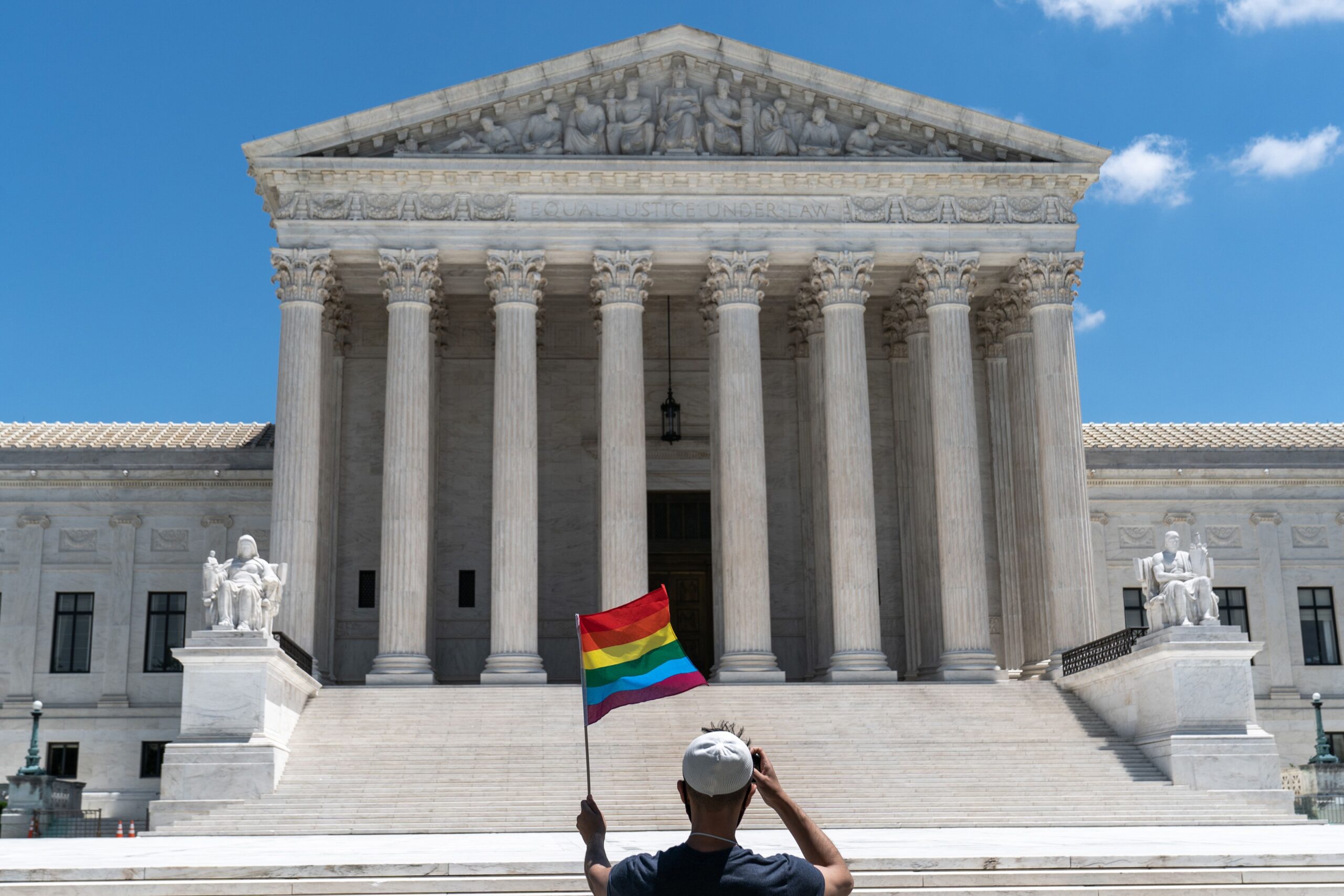
For decades, the composition of the U.S. Supreme Court has been a central battleground in American politics, a proxy war for the nation’s soul. But with the confirmation of Justice Amy Coney Barrett in 2020, solidifying a 6-3 conservative supermajority, the theoretical became tangible. The court is no longer a political football; it is an active engine of legal transformation. We are now living through the opening pages of a new judicial chapter, one where a robust and confident conservative majority is systematically reinterpreting the Constitution and federal law, overturning long-standing precedents, and reshaping the fabric of American life.
This is not merely a shift in a handful of controversial cases. It is a fundamental reorientation of the Court’s role in American government, driven by a judicial philosophy that prioritizes text, history, and tradition over evolving social norms and notions of a “living Constitution.” To understand this moment is to understand the intellectual forces driving it, the landmark decisions that mark its progress, and the profound implications for the future of American rights and governance.
The Forging of a Supermajority: A Confluence of Strategy and Chance
The current conservative majority is the product of a long-game strategy by the Federalist Society and conservative legal activists, combined with pivotal moments of political fortune.
- The Roberts Court (2005-2016): Chief Justice John Roberts, appointed in 2005, initially led a court that included swing Justice Anthony Kennedy. While conservative, this era was marked by caution and incrementalism. Landmark decisions like Citizens United (2010) and Shelby County v. Holder (2013) signaled a conservative direction, but the Court often stopped short of the most dramatic rulings, with Roberts himself famously siding with the liberal bloc to uphold the Affordable Care Act in 2012.
- The Trump Transformation (2017-2020): The single term of President Donald Trump proved to be the most consequential for the judiciary in a generation. The appointments of Justice Neil Gorsuch (to the seat Merrick Garland was denied), Justice Brett Kavanaugh (replacing the swing-vote Kennedy), and most critically, Justice Amy Coney Barrett (replacing the liberal icon Ruth Bader Ginsburg) transformed the Court’s dynamic. The 5-4 conservative edge became a 6-3 supermajority, insulating the conservative bloc from the need to secure a vote from a more moderate justice like Chief Roberts.
- The Philosophical Coalescence: This new majority is united by a commitment to originalism (interpreting the Constitution based on its original public meaning at the time of its adoption) and textualism (adhering strictly to the text of statutes). While individual justices may differ in their application, this shared foundation provides a powerful, consistent framework for their decisions, moving beyond the ad-hoc conservatism of earlier courts.
The Pillars of the New Jurisprudence: Key Legal Doctrines in Action
The Court’s new direction is not a random collection of conservative wins. It is being built upon several interconnected legal pillars that form the architecture of this new chapter.
1. The “Major Questions” Doctrine
This doctrine has emerged as a powerful tool to curtail the regulatory power of federal agencies. It holds that on issues of vast “economic and political significance,” a federal agency must have clear and specific congressional authorization to act. It cannot rely on vague, old statutes to justify sweeping new regulations.
- In Practice: In West Virginia v. EPA (2022), the Court invoked this doctrine to block the Environmental Protection Agency’s Clean Power Plan, which aimed to shift the nation’s power generation from coal to renewable sources. The Court ruled that Congress did not explicitly grant the EPA such transformative power in the Clean Air Act. This decision immediately cast doubt on the ability of agencies like the SEC (on climate disclosure rules) and the CDC (on eviction moratoriums) to act aggressively on major national problems without direct, contemporary instruction from a frequently gridlocked Congress.
2. The Resurgence of History and Tradition
In rights-based cases, particularly those involving the Fourteenth Amendment’s Due Process Clause, the Court has increasingly looked to “history and tradition” as the guiding star for determining what rights are “deeply rooted in this Nation’s history.”
- In Practice: This was the central reasoning in Dobbs v. Jackson Women’s Health Organization (2022). Writing for the majority, Justice Alito argued that because a right to abortion was not deeply rooted in the nation’s history and tradition at the time the Fourteenth Amendment was ratified in 1868, it was not a protected constitutional right. This methodology signals a potential reevaluation of other unenumerated rights, such as the rights to contraception and same-sex marriage, which were also established by the Court recognizing evolving societal understandings, not a historical analysis.
3. The Elevation of Religious Liberty
The Court has dramatically shifted its interpretation of the First Amendment’s Free Exercise Clause, often prioritizing it over the Establishment Clause. The standard has moved from one of neutrality to one where laws that burden religious practice face strict scrutiny and are often invalidated.
- In Practice: In Carson v. Makin (2022), the Court required Maine to allow public tuition funds to be used at religious schools if it provides such funding for private secular schools. In Kennedy v. Bremerton School District (2022), the Court sided with a high school football coach who prayed at the 50-yard line after games, recasting his conduct as private speech protected by the Free Speech and Free Exercise clauses, rather than a state-sponsored establishment of religion. These decisions are dismantling the “wall of separation” between church and state, fostering a greater integration of religion in public life.
4. The Skepticism of Affirmative Action and Race-Conscious Policies
The Court has long been skeptical of racial classifications in government policy. The conservative majority has now brought that skepticism to its logical conclusion, applying a strict color-blind reading of the Equal Protection Clause.
- In Practice: In Students for Fair Admissions v. Harvard (2023), the Court effectively ended race-conscious affirmative action in college admissions. The Court held that the admissions programs at Harvard and UNC violated the Equal Protection Clause because they used race as a specific factor without being sufficiently narrowly tailored to a compelling government interest. This “color-blind” jurisprudence is likely to ripple out, challenging diversity initiatives in the corporate world and K-12 education.
Case Studies in Transformation: From Doctrine to Daily Life
These legal doctrines are not abstract. They have direct and immediate consequences for Americans.
Case Study 1: The Fall of Roe v. Wade and the New Landscape of Reproductive Rights
The Dobbs decision is the most profound example of the new Court’s willingness to overturn precedent. By overruling Roe (1973) and Casey (1992), the Court did not just change a legal rule; it unleashed a political and social earthquake.
- The Legal Shift: The Court moved from a framework that protected a woman’s liberty to choose an abortion to one that gives states plenary power to regulate or prohibit it.
- The Real-World Impact: Overnight, a patchwork of laws emerged. Over a dozen states triggered near-total bans, while others enshrined the right to abortion in their state constitutions. This has created healthcare deserts, forced women to travel thousands of miles for care, and created legal peril for healthcare providers. The decision has also raised legal questions about the cross-state travel for abortions and the regulation of abortion pills, setting the stage for the next wave of legal battles.
Case Study 2: Reshaping the Relationship Between Church and State
The line between church and state, once a cornerstone of American pluralism, is being redrawn.
- The Legal Shift: The Court has moved from a principle that prevented government from appearing to endorse religion to one that prohibits government from discriminating against religious individuals and institutions.
- The Real-World Impact: The Carson and Kennedy decisions, along with earlier cases like Espinoza v. Montana Department of Revenue (2020), empower religious entities to access public funding on equal terms with secular counterparts and protect religious expression in public spaces. This could lead to increased public funding for religious education and greater visibility of religious practice in government settings, fundamentally altering the character of American public life.
Case Study 3: Unlocking the Second Amendment
The Court’s interpretation of the Second Amendment has also expanded dramatically.
- The Legal Shift: After establishing an individual right to bear arms in District of Columbia v. Heller (2008), the Court had largely left the standard for evaluating gun laws ambiguous. In New York State Rifle & Pistol Association v. Bruen (2022), the Court established a new, stringent test: gun regulations must be “consistent with this Nation’s historical tradition of firearm regulation.”
- The Real-World Impact: This “history and tradition” test has invalidated numerous state and local laws, including New York’s proper-cause requirement for concealed carry permits. Lower courts are now struggling to apply this standard, striking down laws banning domestic abusers from possessing guns and large-capacity magazines, creating significant challenges for legislators trying to address modern gun violence with historical analogues.
The Internal Dynamics: A Court of Conservatives, Not a Conservative Bloc
While the justices share a general conservative orientation, they are not a monolith. The internal debates reveal important nuances.
- The “Three Trump Appointees”: Justices Gorsuch, Kavanaugh, and Barrett often form a powerful core, but they diverge. Gorsuch has shown a strong libertarian streak, siding with the Court’s liberals in cases protecting Native American treaty rights (McGirt v. Oklahoma) and LGBTQ+ employment rights (Bostock v. Clayton County). Kavanaugh and Barrett are often seen as more institutionally cautious, though both joined the most transformative decisions.
- The Chief Justice’s Dilemma: Chief Justice Roberts is now often in the minority. He dissented in Dobbs, arguing for the incremental approach of upholding Mississippi’s 15-week ban without overturning Roe entirely. His concern for the Court’s institutional legitimacy and public perception sometimes puts him at odds with the more assertive conservatives. His role has shifted from a pivotal vote to a dissenting voice seeking to moderate the Court’s pace and rhetoric.
- The Solid Conservative Wing: Justices Clarence Thomas and Samuel Alito represent the Court’s most consistent and long-standing originalist voices. Justice Thomas, in particular, has long called for the reconsideration of precedents on substantive due process, and his concurring opinions often serve as a roadmap for future challenges.
The Backlash and the Legitimacy Question
This rapid transformation has provoked a powerful backlash, raising fundamental questions about the Court’s legitimacy.
- Political Reactions: Democrats have called for everything from expanding the number of justices on the Court (“court-packing”) to imposing term limits. These proposals, while unlikely to pass in the current Congress, reflect a deep-seated belief on the left that the Court has become an illegitimate, partisan actor.
- Public Confidence: Public trust in the Supreme Court has plummeted to historic lows. The leak of the Dobbs draft opinion and subsequent protests at justices’ homes have further eroded the Court’s image as a detached, apolitical institution.
- Ethical Scrutiny: Recent revelations about undisclosed luxury travel and gifts received by Justices Thomas and Alito from wealthy Republican donors have ignited a fierce debate over Supreme Court ethics and the lack of a binding code of conduct, fueling perceptions of impropriety and corruption.
Read more: The Battle for the Ballot: How New Voting Laws Are Reshaping the 2024 American Election
The Next Frontier: What’s on the Docket?
The redefinition of American law is far from over. The Court’s upcoming docket and the logical extensions of its new doctrines point to several coming battles.
- The Administrative State: The Court is poised to overturn or significantly curtail the Chevron Doctrine, a 1984 precedent that requires courts to defer to federal agencies’ reasonable interpretations of ambiguous statutes. Overturning Chevron would be a monumental transfer of power from the executive branch to the judiciary, allowing courts to second-guess agency expertise on everything from environmental protection to financial regulation.
- Gun Rights: The Bruen test will continue to be litigated. Challenges to laws banning assault weapons and raising the purchase age for firearms are working their way through the lower courts and will likely reach the Supreme Court.
- Social Issues: Challenges to the rights to same-sex marriage (Obergefell v. Hodges) and contraception (Griswold v. Connecticut) are now legally plausible in the wake of Dobbs. While the majority in Dobbs claimed their reasoning applied only to abortion, the “history and tradition” framework logically imperils these other rights.
- Voting Rights and Election Law: The Court’s conservative majority has been skeptical of the Voting Rights Act, and future cases could further weaken it. The Court will also likely grapple with the independent state legislature theory, which could give state legislatures nearly unchecked power over federal election rules.
Conclusion: A Nation Re-Adjusted
The Supreme Court’s conservative majority is not merely issuing rulings; it is conducting a fundamental recalibration of the American system. It is strengthening legislative power at the expense of the executive, elevating states’ rights above federal oversight, and re-anchoring individual rights in a historical context that can be at odds with contemporary values.
This new chapter is one of profound legal uncertainty and political turmoil. It has returned some of the most divisive questions in American life—abortion, guns, religion—to the political arenas of the 50 states and a gridlocked Congress. In doing so, it has made the outcomes of Supreme Court nominations the highest-stakes issue in American politics. The Court, designed to be a stabilizing force, has become an agent of revolutionary change. How the nation adapts to this redefined legal landscape will determine the character of American democracy for generations to come.
Read more: Is Trump’s Deployment of the National Guard Constitutional? What’s at Stake [2025 Legal Deep Dive]
Frequently Asked Questions (FAQ)
Q1: Is the Supreme Court now just a political body?
While the justices themselves would vehemently deny that their decisions are politically motivated, the correlation between the political party of the appointing president and the justices’ votes on high-profile issues is stark. The use of a consistent judicial philosophy (originalism/textualism) leads to outcomes that align with conservative policy preferences. Critics argue this makes the Court functionally political, while supporters contend it is finally applying the law neutrally, regardless of political outcome.
Q2: What is the difference between a “conservative” and a “liberal” approach to judging?
Broadly speaking, conservative jurisprudence (originalism/textualism) seeks to interpret legal texts based on their original public meaning and fixed text. The goal is to constrain judicial discretion. Liberal jurisprudence (the “living Constitution”) often views the Constitution’s broad principles as evolving to meet the needs of a changing society. This approach grants judges more flexibility to protect rights not explicitly enumerated in the text.
Q3: Can Congress do anything to reverse Supreme Court decisions?
Yes, but it is difficult. Congress can pass a new law that addresses the Court’s specific objections, or it can propose a Constitutional Amendment to overturn a decision (as was done with the 16th Amendment after a Supreme Court tax ruling). For example, Congress could theoretically pass a law explicitly granting the EPA the authority to regulate carbon emissions, overcoming the “major questions” doctrine. However, given partisan divisions and the filibuster, this is often not feasible.
Q4: What is the “shadow docket”?
The “shadow docket” refers to orders and decisions issued by the Court without the full process of oral arguments and lengthy, signed opinions. These are often emergency appeals, such as requests to block a lower court ruling. The conservative majority has been increasingly willing to use the shadow docket to grant significant relief, such as reinstating the Trump-era “Remain in Mexico” policy or blocking COVID-related eviction moratoriums and vaccine mandates, raising concerns about a lack of transparency and reasoned decision-making.
Q5: Are rights to contraception and same-sex marriage now at risk?
Legally, they are on less secure footing than they were before the Dobbs decision. The reasoning in Dobbs—that unenumerated rights must be “deeply rooted in this Nation’s history and tradition”—directly challenges the foundations of Griswold (contraception) and Obergefell (same-sex marriage). While the Court’s majority stated that Dobbs was only about abortion, the legal framework they have embraced invites future challenges to these other rights. Justice Thomas explicitly called for the Court to reconsider these precedents in his Dobbs concurrence.
Q6: What is the “Chevron Doctrine” and why does it matter?
Established in Chevron U.S.A., Inc. v. Natural Resources Defense Council, Inc. (1984), this doctrine instructs courts to defer to a federal agency’s reasonable interpretation of an ambiguous statute that Congress has tasked the agency with administering. It is a cornerstone of the modern administrative state, recognizing that agencies have scientific and technical expertise that generalist judges lack. If the Court overturns or weakens Chevron, it would shift enormous power from federal agencies (executive branch) to the courts (judicial branch), fundamentally altering how environmental, financial, and public health regulations are created and enforced.