
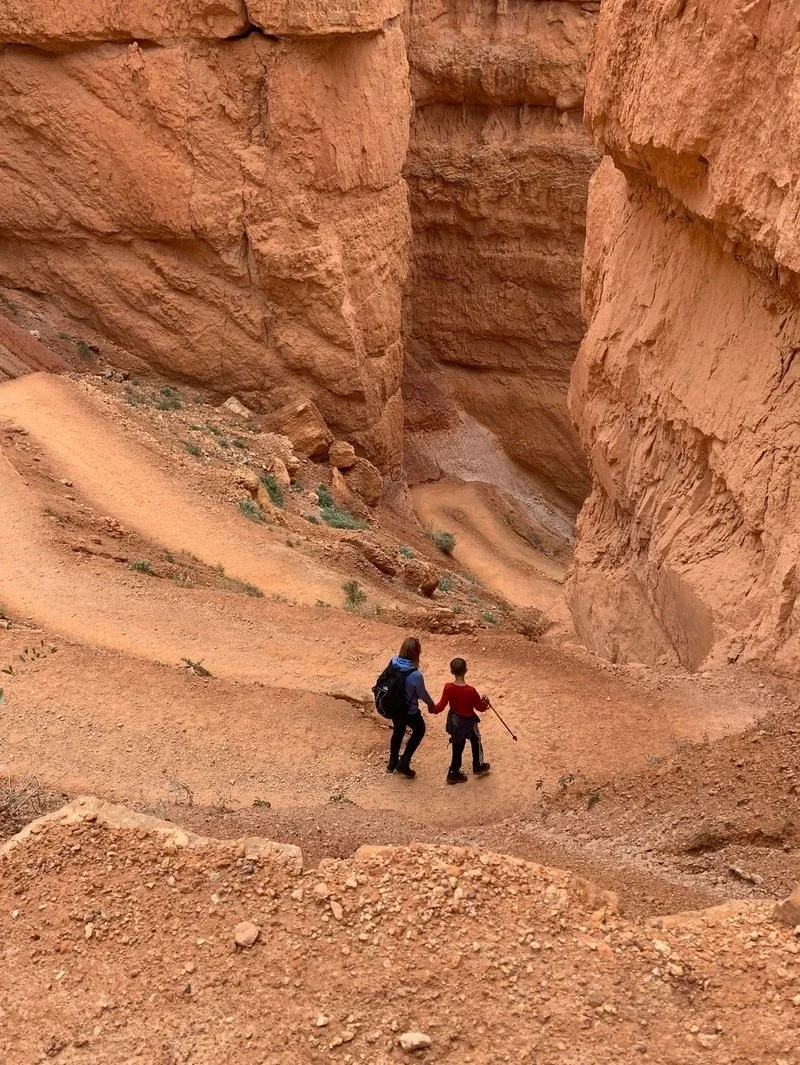
We’ve all seen the images: epic, sweeping vistas of distant national parks, social media feeds brimming with photos of rugged peaks on far-flung continents. This narrative tells us that a true outdoor adventure requires a plane ticket, a hefty budget, and weeks of planning. It’s a compelling story, but it’s also a myth.
The most rewarding adventure isn’t always a thousand miles away. Often, it’s waiting just outside your door, in the secret, overlooked wild spaces of your own community. This is the call of the “unplugged adventure”—a conscious choice to disconnect from digital noise and reconnect with the tangible, natural world immediately around you. It’s about trading the iconic for the intimate, the crowded for the quiet, and discovering that you don’t need to cross time zones to find wonder, challenge, and profound peace.
This guide is your map to that hidden world. We will move beyond the most popular, well-trodden paths to uncover the secret hiking trails, forgotten parks, and unheralded green spaces that constitute your personal backyard wilderness. This isn’t just about finding a new place to walk; it’s about cultivating a new way of seeing.
The Philosophy of the Backyard Adventurer: Why Go Local?
Before we dive into the “how,” let’s solidify the “why.” Embracing local exploration offers a suite of benefits that distant travel often cannot.
1. Deepened Sense of Place: When you repeatedly explore your local area, you develop a relationship with the land. You witness the subtle shift of seasons in a specific grove of trees. You learn where the first spring wildflowers bloom and where the foxgloves stand tallest in summer. This cyclical observation fosters a profound sense of belonging and roots you in your own ecosystem. You’re no longer just a resident; you’re a steward and a witness.
2. The Ultimate in Sustainability: Local adventures have a minimal carbon footprint. By walking, cycling, or taking short drives to your trailhead, you are participating in the most sustainable form of tourism possible. You’re also investing in your local community, sometimes quite literally if you stop at a nearby farm stand or cafe.
3. Spontaneity and Flexibility: The forecast looks perfect for a hike at 3 PM? You can go. A free Saturday morning appears out of nowhere? Your adventure is waiting. Without the need for complex logistics, you can align your outings with your energy levels and the whims of the weather, leading to more frequent and often more enjoyable experiences.
4. Cultivating a “Beginner’s Mind”: It’s easy to be awestruck by the Grand Canyon. It takes a more practiced eye to find the same awe in the intricate geometry of a spiderweb bejeweled with morning dew in a city park. Local exploration trains you to find beauty in the miniature, the subtle, and the commonplace. This practice of mindful observation is a form of active meditation that reduces stress and increases happiness.
5. Building Community and Local Knowledge: As you explore, you’ll meet fellow local adventurers—dog walkers, bird watchers, trail runners. These interactions build a network of shared knowledge and often lead to tips about other hidden gems. You become part of the informal community that knows and cherishes these places.
The Cartographer’s Quest: How to Find Your Secret Trails
The most common objection is, “But I don’t have any secret trails near me!” I assure you, you do. They just require a shift in your search strategy. Put away the generic “hiking near me” Google search and become a detective of the disregarded.
1. Master Digital Sleuthing with Niche Tools:
- AllTrails Deep Dives: Don’t just look at the first three results. On AllTrails or similar apps, use the map view instead of the list view. Zoom in tightly on the green spaces around you—regional parks, nature preserves, land trusts. Look for the thin, grey lines that indicate lesser-used trails. Read the reviews for trails with fewer than 50; these are often the hidden gems.
- Strava Global Heatmap: This is a powerful, often-overlooked tool. The Strava Heatmap shows the aggregated, anonymous data of millions of runners and cyclists. The bright red lines are the popular routes. Look for the faint blue and green lines branching off from them. These represent social trails, connector paths, and routes known mainly to locals. (Use this tool responsibly and always respect trail closures and private property).
- Google Earth/Maps Topography: Switch to terrain or satellite view. Look for green corridors along rivers (riparian zones), undeveloped ravines, and forested patches between neighborhoods. Often, trails exist here without being on any official map.
2. Go Analog: The Power of Physical Sources:
- Local Guidebooks from Small Presses: Search for “[Your County/Region] hiking guidebook.” Books published by local historical societies or small regional presses are goldmines of hyper-local knowledge, often detailing trails too small for national publishers to consider.
- City and County Parks & Rec Websites: Don’t just look for the major regional parks. Dig into the websites for your specific town, city, and county. They often list small “pocket parks,” “natural areas,” and “open spaces” that see very little traffic. These can be as small as 10 acres but feel like a world of their own.
- Land Trusts and Conservancies: These organizations are dedicated to preserving natural land. Their properties are often pristine, quiet, and maintained for low-impact recreation. Search for “[Your State] Land Trust” and explore their individual preserve listings.
3. The Art of Ground-Level Reconnaissance:
- Follow the Water: Rivers, streams, and creeks often have maintenance paths or old towpaths running alongside them. These can form the backbone of fantastic linear hikes.
- Look for the “Unofficial” Trailhead: This is rarely a paved lot with a sign. It’s a pull-off wide enough for one or two cars on a country road, a gap in a fence at the end of a cul-de-sac, or a well-worn path leading into the woods behind a public building. Always be sure you are not trespassing on private property.
- Talk to People: Strike up a conversation with the staff at a local outdoor gear shop. Ask an elderly person walking their dog in a well-known park if they know of any quieter spots. Farmers at a market often know the lay of the land intimately. People are often proud to share their secret spots if you ask with genuine curiosity and respect.
The Art of the Unplugged Hike: Techniques for Deep Engagement
Finding the trail is only half the battle. How you hike it is what transforms a walk into an adventure. The goal is to shift from passive consumption to active participation.
1. Intentional Disconnection: This is non-negotiable for an unplugged adventure. Put your phone on airplane mode or, better yet, leave it in your pack. The goal is to stop documenting the experience for others and start living it for yourself. If you use your phone for photos or navigation, discipline yourself to use it only for that purpose.
2. Practice “Forest Bathing” (Shinrin-Yoku): Adopt the principles of this Japanese practice. It’s not about distance or speed. It’s about immersion. Walk slowly. Breathe deeply. Consciously engage all your senses.
- Sight: Don’t just look; see. Notice the patterns in the bark, the way light filters through the canopy, the subtle colors of the mosses and lichens.
- Hearing: Close your eyes for a minute. What do you hear? The wind in the leaves, the call of a distant bird, the rustle of a chipmunk in the undergrowth. Try to identify the different layers of sound.
- Smell: Inhale the scent of damp earth after a rain, the crisp aroma of pine, the faint sweetness of decaying leaves.
- Touch: Feel the texture of a rough stone, the smoothness of a birch branch, the coolness of a stream.
3. Become a Amateur Naturalist:
- Birding by Ear: Download the Merlin Bird ID app from the Cornell Lab of Ornithology. You can use it to identify birds by their songs, turning your hike into a sonic scavenger hunt.
- Tree and Plant Identification: Get a small, lightweight field guide for your region. Learn to identify just three new trees or wildflowers on each hike. This knowledge builds over time, making every walk a review session.
- Track and Sign: Look for animal tracks in muddy sections of the trail. Can you identify the scat (droppings)? See any signs of chewing on nuts or bark? This reveals the hidden, bustling life of the forest that is often invisible to the hurried hiker.
4. Embrace Micro-Adventures: An adventure doesn’t need to last all day. A “micro-adventure” is exactly what it sounds like: a short, local, simple, and cheap adventure. A 45-minute hike at dawn before work. A moonlit walk in a local park. A lunch break spent sitting by a creek. These small injections of nature are powerful antidotes to the stress of modern life.
Gearing Up for the Nearby Wild
You don’t need the latest ultralight, carbon-fiber gear for a local adventure, but being prepared is still a tenet of safety and comfort.
The Ten Essentials (Local Edition):
Even on a short, local hike, things can happen. A turned ankle, a sudden weather change, or a wrong turn can quickly become serious. Always carry these adapted “Ten Essentials”:
- Navigation: A physical map and compass (and the knowledge to use them), even if you have a GPS. Your phone battery can die.
- Headlamp/Flashlight: With extra batteries. Your two-hour hike might take longer than expected.
- Sun Protection: Sunglasses, sun-protective clothing, and sunscreen.
- First Aid Kit: Including blister treatment, antiseptic wipes, and any personal medications.
- Knife/Multi-tool: A simple pocket knife is invaluable.
- Fire Starter: Waterproof matches or a lighter in a sealed bag.
- Emergency Shelter: A lightweight emergency bivvy sack or even a large trash bag can be a lifesaver if you get injured and have to wait for help.
- Extra Food: Beyond what you expect to eat.
- Extra Water: Or a means of purification (filter or tablets) if you have a known water source.
- Extra Clothes: An insulating layer and a rain shell, regardless of the forecast.
Leave No Trace in Your Backyard:
The principles of Leave No Trace are perhaps even more critical in small, fragile local ecosystems that see frequent use.
- Plan Ahead and Prepare: Know the regulations for the area.
- Travel and Camp on Durable Surfaces: Stay on the trail, even if it’s muddy, to prevent erosion and protect fragile plant life.
- Dispose of Waste Properly: “Pack it in, pack it out.” This includes all trash, including apple cores and banana peels.
- Leave What You Find: Preserve the past and the present. Don’t pick wildflowers or take rocks. Leave everything as you found it for the next person to discover.
- Minimize Campfire Impacts: In most small parks, campfires are prohibited. Enjoy a stove-less lunch.
- Respect Wildlife: Observe from a distance. Never feed animals.
- Be Considerate of Other Visitors: Keep noise to a minimum. Yield to others on the trail.
Read more: America’s Place in a Shifting World: Foreign Policy and National Security in the 2024 Debate
A Case Study: Transforming the Familiar
Let’s take a theoretical example. Imagine your town has a well-known 200-acre “Riverbend Park.” Everyone goes there. The main loop trail is wide, paved in sections, and often crowded.
The Conventional Experience: You walk the 2-mile main loop, listening to a podcast, nodding at other walkers, and returning to your car feeling like you’ve “done” the park.
The Unplugged Adventurer’s Experience:
- Research: You look at the Strava Heatmap and see a faint network of trails on the steep, wooded bluff overlooking the river, away from the main path.
- The Hunt: You find the unmarked trailhead—a narrow path between two large boulders, mentioned in a single online review from 5 years ago.
- The Hike: You leave your phone in your bag. The trail is narrow, rooty, and requires your full attention. You climb steadily. Halfway up, you stop to watch a pileated woodpecker hammering on a dead tree. You notice the air is cooler, the sounds of the park below are muffled.
- The Reward: You emerge on a rocky outcrop not marked on any official map. The view is not of a majestic mountain, but of the river winding through your familiar town from a perspective you’ve never seen. It feels like a secret. You sit for twenty minutes in silence, watching the water flow. You feel a sense of ownership and discovery that the crowded main loop could never provide.
- The Return: You hike down, feeling more refreshed and connected than after any previous visit. You’ve transformed a generic park into your secret sanctuary.
The Lifelong Trail
The pursuit of unplugged local adventures is a lifelong practice. It’s a mindset that prioritizes depth over distance, curiosity over checklist tourism. The trails you discover will change with the seasons and with your own life. The path you run in your twenties may be the one you walk slowly with your children in your thirties, and the bench you find overlooking a quiet pond may become a place of solace and reflection in later years.
By choosing to explore your backyard, you are not settling for less. You are choosing more—more connection, more resilience, more wonder, and a deeper, more sustainable relationship with the world that is, ultimately, your true home. So lace up your boots, leave your phone in your pocket, and step out the door. Your unplugged adventure is waiting, just beyond the familiar, in the secret world of your own backyard.
Read more: The Economic Election: How Inflation and the Cost of Living Are Driving Voter Sentiment
FAQ Section
Q1: I live in a major city with very little green space. Is this still possible for me?
Absolutely. The definition of “backyard” expands. Look for railroad trails that have been converted to greenways, botanical gardens, large cemeteries (which often double as arboretums and are wonderful for quiet contemplation), and even the grounds of museums or corporate campuses that may be open to the public. Urban exploration, seeking out street art, unique architecture, and historical markers, can be its own form of “hiking.” The principles of mindful observation remain the same.
Q2: Is it safe to hike these lesser-known trails alone?
Safety is paramount. Always tell someone your precise route and expected return time. Stick to trails that feel within your ability level. Carry the Ten Essentials and a fully charged phone (even if it’s in airplane mode). Trust your instincts—if a trail or situation feels unsafe, turn back. Consider carrying a personal locator beacon (PLB) or satellite messenger for remote areas, even if they are local.
Q3: How can I be sure I’m not trespassing on private property?
This is a critical question. Always assume land is private unless you have confirmation it is public. Use official maps from park services and land trusts. Look for posted signs. If using a map app like OnX, which has a “Hunt” layer that shows property boundaries, can be very useful. If you’re unsure, err on the side of caution and don’t proceed.
Q4: I’m an experienced hiker used to big mountains. Won’t I be bored?
This is a challenge of perspective, not terrain. The challenge shifts from physical exertion to mindful engagement. Set yourself “micro-missions”: learn to identify every bird song you hear on a single hike; map a new route by compass alone; practice nature photography focusing on macro details; or use the hike as moving meditation. You might be surprised at how physically challenging a short, steep, and technical local ravine can be.
Q5: What if I get lost on an unmarked trail?
This is why carrying a physical map and compass is essential. Before you start, note your general direction and major landmarks (a river, a ridge, a road). The most important rule if you get lost is S.T.O.P.
- Sit down.
- Think.
- Observe your surroundings.
- Plan.
Do not panic and keep walking. Retrace your steps carefully. If you cannot, stay put to make yourself easier to find. Blow your whistle (a key part of your first aid kit) in sets of three blasts, which is the universal signal for distress.
Q6: How can I contribute to or help maintain these local trails?
This is a wonderful way to give back. Look for local “Friends of” groups for your parks. Many land trusts and municipalities organize volunteer trail maintenance days. You can also practice “passive maintenance” by gently picking up any litter you see on your hikes. Becoming an advocate for these spaces, by reporting major issues like fallen trees or erosion to the managing authority, helps ensure they remain for others to discover.